


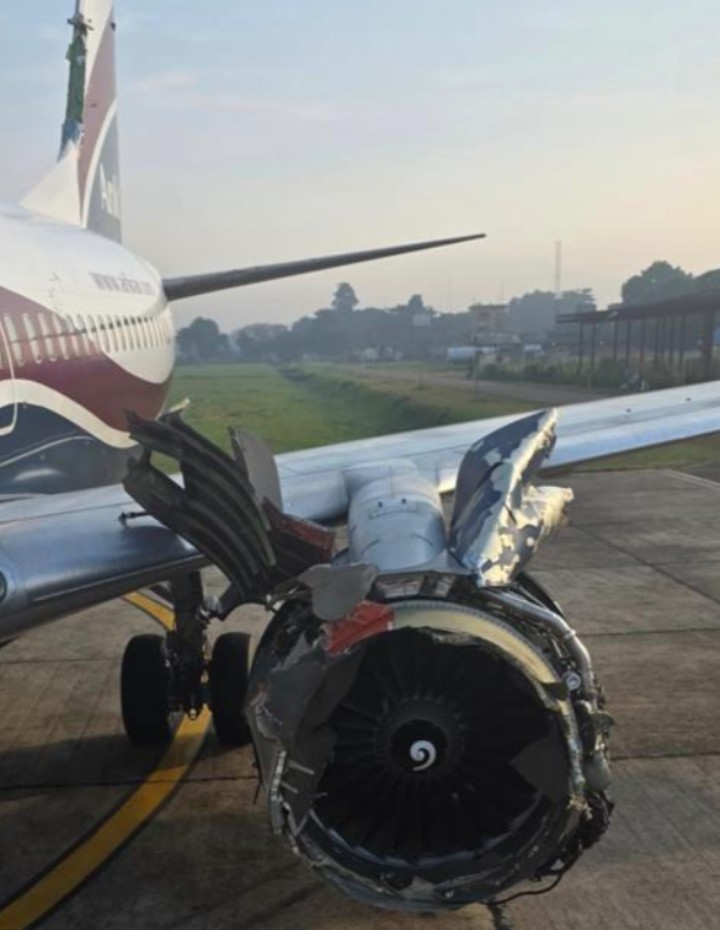
Passengers travelling on the busy Lagos–Port Harcourt route experienced disruptions this week after separate safety incidents involving Arik Air and Air Peace aircraft, highlighting persistent operational and environmental challenges affecting Nigerian aviation.
On Wednesday morning, an Arik Air Boeing 737-700 aircraft (registration number 5N-MJF), operating Flight W3 740 from Lagos to Port Harcourt, was forced to make an emergency diversion to Benin City after the crew heard a loud bang from the left engine while descending into Port Harcourt International Airport, Omagwa.
Following standard safety protocols, the pilots diverted to the nearest airport as a precaution. The aircraft landed safely at Benin Airport without further complications.

All 80 passengers and crew members onboard disembarked safely, and no injuries were reported.
Arik Air’s Public Relations and Communications Manager, Adebanji Ola, apologised for the disruption, reiterating that passenger safety remains the airline’s top priority.
The airline subsequently made arrangements to transport affected passengers to Port Harcourt.

In a related development, Air Peace also confirmed that a bird strike disrupted its Lagos–Port Harcourt service on Thursday, January 22, 2026.
The incident occurred upon landing at Port Harcourt International Airport and necessitated mandatory safety inspections on the affected aircraft.
Air Peace deployed an alternate aircraft to continue operations on the route. Spokesperson Osifo-Whiskey Efe apologised to passengers for the inconvenience caused.
Air Peace Chairman, Allen Onyema, has repeatedly drawn attention to the operational and financial strain caused by bird strikes, noting that a single incident can ground an aircraft for weeks due to extensive inspections and repairs.
Industry observers say the incidents underscore ongoing infrastructure and environmental hazards at some Nigerian airports, particularly the persistent challenge of bird strikes.
With 49 bird strike incidents recorded within nine months in 2025, the issue has become a systemic concern for airlines.
Such occurrences not only disrupt schedules and inconvenience passengers through delays and cancellations but also impose significant financial costs on airlines and raise safety concerns.
Experts say the frequency of these incidents calls for stronger collaboration between airlines, airport authorities, and environmental agencies to address wildlife hazards around airports and improve overall aviation safety.













Leave a comment