


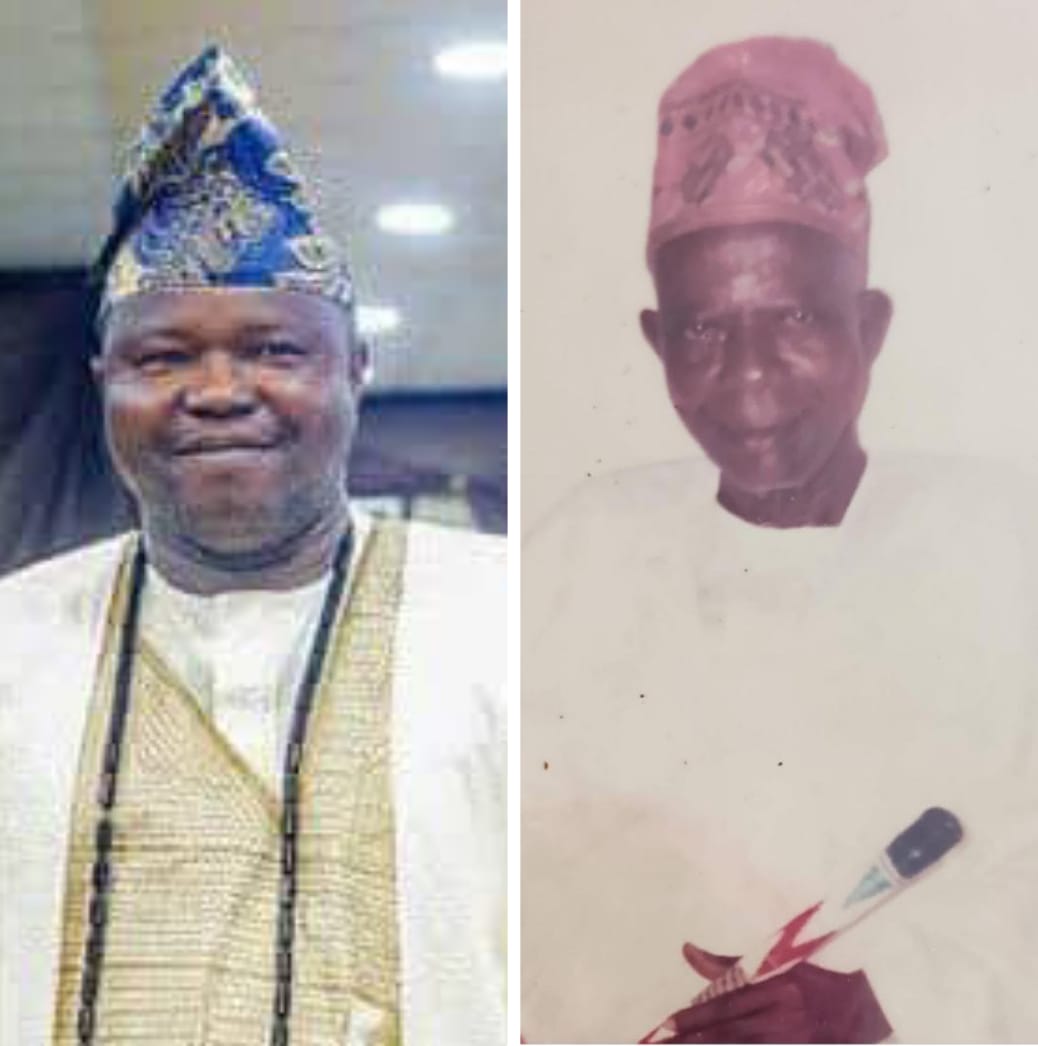
As the race for the next Awujale of Ijebuland intensifies, Prince Samuel Olawunmi, Assistant Secretary of the Four Ruling Houses of the Awujale (Idile Oba Merin Awujale) and a prominent member of the Anikinaiya Ruling House, has called for strict adherence to Ijebu customary law and traditional norms in the ongoing succession process.
Speaking with journalists in Ijebu-Ode on Friday, Prince Olawunmi cautioned that the sanctity of Ijebuland’s royal heritage must not be compromised by politics, influence, or wealth. He noted that the late Awujale, Oba (Dr.) Sikiru Kayode Adetona, himself consistently warned against the erosion of traditional values in the selection of future monarchs.
“The Awujale stool is not a prize for the highest bidder,” he said. “Ijebu custom recognizes lineage, character, and service — not affluence or influence — as the foundation of true kingship.”
Prince Olawunmi cited historical records from the National Archives, noting that earlier Awujales emerged from modest backgrounds.
“Historically, Awujales were ordinary Ijebu men — hunters, herbalists, barbers, and even students,” he explained. “Oba Sikiru Adetona was an undergraduate before ascending the throne. This shows that the Ijebu crown has never been determined by wealth or political power, but by divine order and tradition.”

He warned against attempts to marginalize other ruling houses under the guise of the current rotation, emphasizing that while it is the turn of the Fusengbuwa Ruling House, the process must still reflect the unity of the four royal lineages — Gbelegbuwa, Anikinaiya, Fusengbuwa, and Fidipote.
Reflecting on the legacy of the late Prince Adebisi Fasasi Adeyemi (Obanlefa) — former Olori-Ebi of the Fusengbuwa Ruling House — Olawunmi described him as a unifier who strengthened ties among the four royal families.
“Obanlefa’s 25-year tenure as family head remains a historic symbol of peace and unity,” he said. “He upheld the ancestral bond among the ruling houses — a bond that continues today under Alhaji Toheeb Alaga, current Head of the Four Ruling Houses and the Anikinaiya Ruling House.”
Olawunmi also recalled his own early encounters with Ijebu royalty, mentioning elders like Pa Abdul-Kafar Bifajoko Olowu and Prince (Dr.) Adebola Sanya, who served as pillars of the Anikinaiya dynasty.
He reaffirmed that descendants from the eight royal units (Idi Igi Mẹjọ) of the Fusengbuwa family remain the legitimate heirs of the throne, deeply rooted in the hereditary system that defines Ijebu tradition.
Prince Olawunmi highlighted that the selection of the Awujale is governed by the 1957 Chiefs Law (Section 4[2]), which outlines the hereditary order for succession.
According to the law, candidates are to be chosen from the Abidagba Okunrin (male line), followed by the Abidagba Obirin and Abidoye branches in that order. He noted that the 2021 Ogun State Obas and Chiefs Law further reinforces this long-standing legal and cultural framework.
“Our elders and kingmakers must be guided by fairness, truth, and heritage,” he urged. “Violating these principles will not only harm the process but weaken the moral authority of the Awujale throne itself.”
Prince Olawunmi appealed to the Fusengbuwa Ruling House and the Ijebu Kingmakers to remain united and transparent, especially in this sensitive period of royal transition. He called on leaders like Alhaji Lateef Owoyemi and Otunba Adedokun Ajidagba to emulate the virtues of late Obanlefa in safeguarding the honour and cohesion of the ruling house.
“The Awujale throne is the soul of Ijebuland — sacred, unifying, and eternal. Let us protect it by upholding the truth of our lineage and the sanctity of our customs,” he concluded.









Leave a comment