


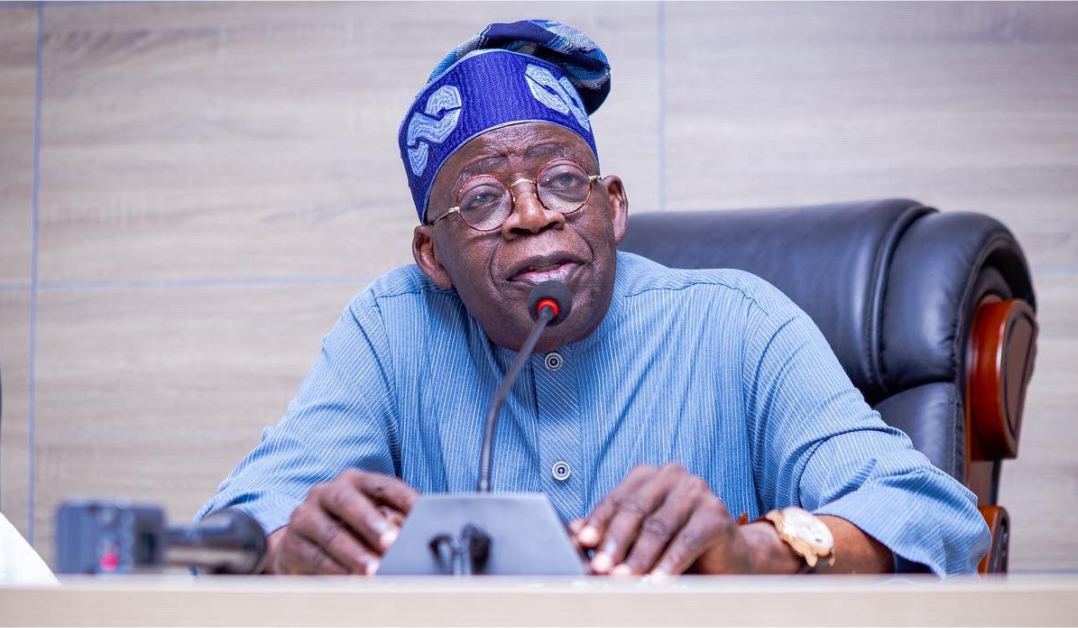

President Bola Ahmed Tinubu has charged the Nigeria Liquefied Natural Gas Limited (NLNG) to intensify efforts to reduce gas flaring and transform the country’s vast gas resources into tangible economic benefits for Nigerians.
Tinubu gave the charge on Wednesday, August 26, 2026, when he received the Board of Directors and executive management of NLNG, led by its Managing Director and Chief Executive Officer, Engineer Adeleye Falade, at the State House in Abuja.
The President said while he was encouraged by NLNG’s efforts to expand its operations and take advantage of opportunities in the international energy market, greater attention must be given to the domestic utilisation of Nigeria’s gas resources.
He specifically challenged the company to move away from allowing associated gas to be wasted through flaring and instead convert what could constitute an environmental liability into an economic asset capable of improving the lives of Nigerians.
“My major concern is the domestic utilisation, where you must be able to take out the flaring and convert potential environmental liability to what could be strategically and economically beneficial to the consumers in the country,” the President said.
Tinubu acknowledged the revenue being generated through NLNG’s participation in the international energy market but urged the company to ensure that Nigerians at home also derive meaningful benefits from the country’s natural gas wealth.
“Yes, you are doing great to really want the revenue up and taking advantage of international interests so that Nigeria might be deriving benefits, but help us back home,” he added.
The President stressed that Nigeria’s natural resources should not merely remain assets beneath the ground or sources of foreign exchange but must be developed and deployed in ways that support economic growth and improve the welfare of citizens.
He said the Federal Government was prepared to provide incentives where necessary to enable NLNG to expand its capacity and maximise the opportunities available in the gas sector.
“I enjoy the teamwork and the way the NLNG is going, and you all, as team leaders, are giving value to what was the initial objective of the company. If any other incentive is needed to stimulate growth and expand your capacity, I will be willing to do that,” Tinubu said.
The President maintained that the ultimate value of Nigeria’s natural resources would be measured by their ability to serve the economy and the people.
“We look straight far into the future, and I believe that this country has what it takes; but whatever asset that we have in the ground is nothing unless it’s brought up to service the economy, the people, and realisation of a good return on investment,” he said.
Responding to the President, NLNG Managing Director and Chief Executive Officer, Engineer Adeleye Falade, said the delegation was at the State House to brief Tinubu on the company’s operations and developments since the current management assumed office in April 2026.
Falade disclosed that NLNG had generated more than $150 billion since inception, with its shareholders, including the Federal Government of Nigeria, receiving approximately $47 billion in dividends.
Nigeria owns a 49 per cent stake in NLNG, making the company a significant contributor to government revenue and a strategic component of the country’s energy and economic development plans.
The NLNG chief executive also explained that the company had previously operated at about 60 per cent capacity because inadequate crude oil production constrained the availability of feed gas, leaving only four of its six production trains operational.
He said increased oil production resulting from recent developments in the oil and gas industry had enabled NLNG to increase its operating capacity to five trains, with further improvements expected.
Falade disclosed that the company was also working towards the inauguration of Train 7, a major expansion project expected to increase NLNG’s production capacity by about 35 per cent.
According to him, NLNG currently accounts for approximately five per cent of the global LNG market, underscoring Nigeria’s position as an important player in the international gas industry.
Falade also highlighted NLNG’s contribution to the domestic energy market, particularly through the supply of liquefied petroleum gas, commonly known as cooking gas.
The domestic supply of LPG is significant as the Federal Government continues to promote cleaner cooking energy and reduce dependence on more polluting fuels, while also seeking to lower the cost of energy for households and businesses.
NLNG has previously reported that its operations have helped convert substantial volumes of associated gas that might otherwise have been flared into LNG and natural gas liquids, contributing to efforts to reduce gas flaring in the country.
The NLNG management also briefed Tinubu on the company’s infrastructure investments, including the Bonny-Bodo Road and Bridge project, which has been completed and is awaiting official commissioning.
The project is part of NLNG’s wider investment in infrastructure and development within its host communities.
Falade commended the security agencies and regulators in Nigeria’s oil and gas industry for their contributions to improved stability in the sector.
He also said NLNG’s shareholders had commended the stability of Nigeria’s fiscal environment, which he said was creating greater confidence for investment in the industry.
Tinubu’s intervention comes against the backdrop of renewed efforts by the Federal Government to increase the value derived from Nigeria’s abundant natural gas resources while reducing the environmental and economic losses associated with gas flaring.
For the President, the challenge is not merely to extract and export gas but to ensure that more of the resource is converted into electricity, cooking fuel, industrial inputs, employment, investment opportunities and other benefits that Nigerians can directly feel.
The meeting was attended by senior NLNG officials and government representatives, including NLNG Deputy Managing Director Olakunle Osobu; TotalEnergies EP Nigeria Managing Director and Country Chair Matthieu Bouyer; Nigeria Agip Exploration Vice Chairman and Managing Director Maurizio Pinna; and NLNG General Manager, External Relations and Sustainable Development, Sophia Horsfall.
Minister of Information and National Orientation Mohammed Idris, Special Adviser to the President on Information and Strategy Bayo Onanuga, and Senior Special Assistant to the President on Energy Transition Yasmin Mohammed were also present.
With NLNG’s operating capacity expanding, Train 7 being pursued and greater attention being directed towards domestic gas utilisation, the President’s message to the company is that Nigeria’s gas wealth must increasingly move from the flare stack to the homes, factories and businesses that drive the national economy.







Leave a comment