


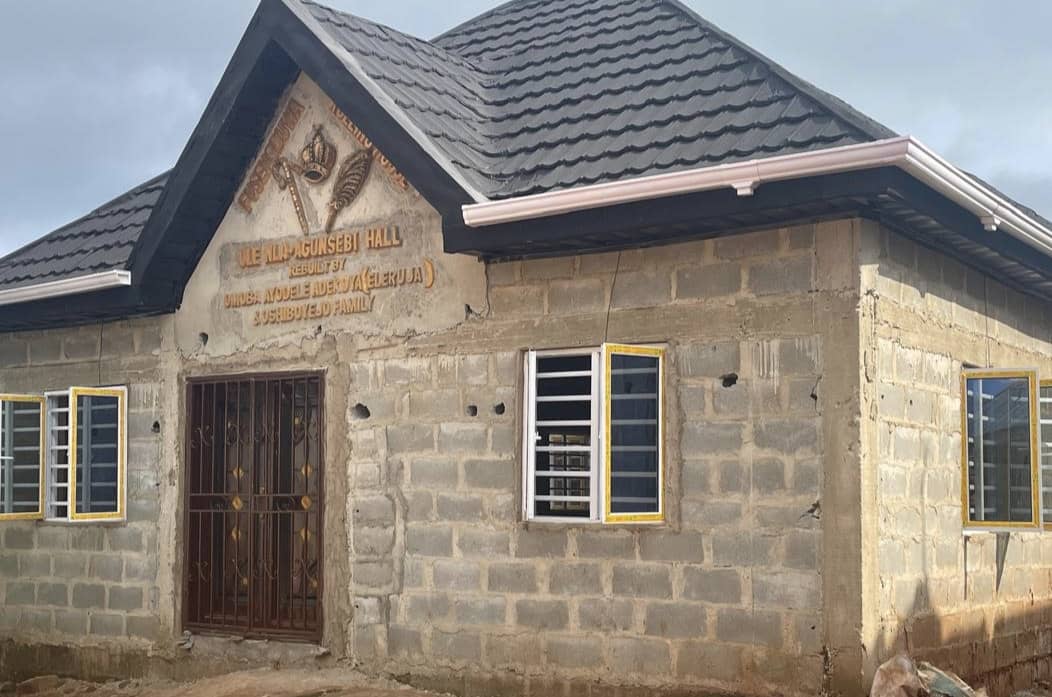
The controversy trailing Alhaji Wasiu Ayinde’s alleged claim to the Fusengbuwa Ruling House has brought to the fore a deeper and more unsettling reality: the issue is no longer about Kwam 1, but about internal rivalries among lineages within the Fusengbuwa Ruling House itself. What is playing out is a struggle between personal ambition and established historical fact.
Fusengbuwa and Fidipote are two of the four recognised Ruling Houses of the Awujale of Ijebuland, each shaped by peculiar historical circumstances. The present claims and counter-claims surrounding the Fusengbuwa Ruling House are traceable to the long-standing co-existence of Jadiara descendants and Fusengbuwa lineages within Agunsenbi Quarters, Ijebu-Ode. A similar historical arrangement exists between the Ojigi Amoyegeso and Fidipote Ruling Houses within the Fidipote section of Idewon Quarters.

Although tradition and law render the Fusengbuwa Ruling House ineligible to produce the Dagburewe of Idowa, history shows that the House influenced and dictated the choice of Dagburewe among Jadiara descendants until 1954. That arrangement ended when the Jadiara lineage rejected the Fusengbuwa-backed candidate and elected its own.
Contrary to recent reports by Amotekun Oodua TV and other online platforms, the Fusengbuwa Ruling House is made up of eight widely acknowledged lineages: Olufadekemi (Male Abidaagba), Adesimbo Tunwase (Male Abidaagba), Ushenowo (Female Abidaagba), Okuyandewo (Female Abidaagba), Adebiyi (Female Abidaagba), Oshinuga (Male Abidoye), Adekenu (Female Abidoye), and Adeberu (Female).
It is therefore troubling to see false claims circulating online that describe Oshinuga as an Abidaagba lineage, when historical records clearly identify it as Abidoye. Equally misleading are assertions that some Fusengbuwa lineages are “closed” or without descendants, even as candidates from those same lineages actively participate in the Awujale succession process.
For the record, the Olori Ebi of the Fusengbuwa Ruling House, Otunba Lateef Owoyemi, and one of the contenders for the Awujale throne, Prince Adebowale Ogunwo, are both from the Adebiyi (Usenbanke) lineage. Similarly, Otunba Adedokun Ajidagba, Deputy Chairman of the Fusengbuwa Ruling House, hails from the Adeberu lineage. Any attempt to distort these facts amounts to a deliberate rewriting of history.
Historically, Abidaagba refers to children born to an Awujale during his reign, while Abidoye denotes those born before ascension. Although Oshinuga was the first child of Oba Fusengbuwa, he was not Abidaagba. These distinctions are clearly defined in the 1957 Awujale of Ijebuland Chieftaincy Declaration, which many observers believe explains the renewed attempts to blur historical boundaries in the ongoing succession contest.
These facts are neither obscure nor contested. They are on public record and backed by judicial decisions. Attempts to undermine them do not diminish the integrity of the Fusengbuwa Ruling House or the Awujale institution; rather, they call into question the credibility of those promoting inaccurate narratives.
The question that now lingers is simple: will vested interests submit to historical truth, or will ambition continue to challenge facts that have stood the test of time? Only time will tell.










Leave a comment