


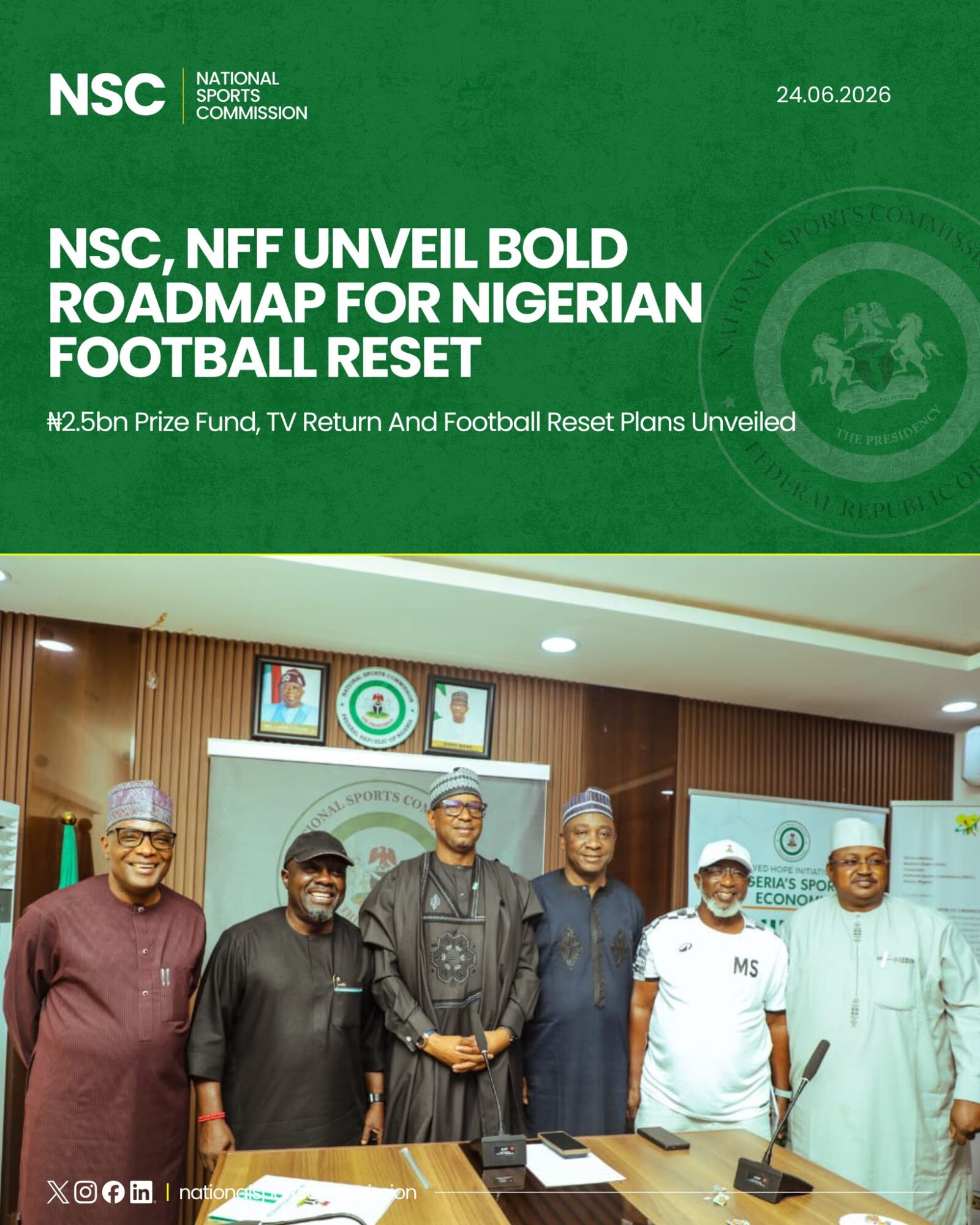
Nigeria’s football landscape may be on the verge of its most significant transformation in decades following a high-level strategic meeting between the National Sports Commission (NSC) and the Nigeria Football Federation (NFF), where far-reaching reforms aimed at revitalising the country’s football ecosystem were unveiled.
The meeting, held at the National Sports Commission headquarters in Abuja, brought together key decision-makers in Nigerian football, including Chairman of the NSC, Shehu Dikko, Director-General of the Commission, Bukola Olopade, President of the Nigeria Football Federation, Ibrahim Gusau, and other critical stakeholders determined to reposition Nigerian football for sustainable growth and global competitiveness.
The strategic engagement focused on strengthening every layer of the game—from grassroots development and domestic leagues to national teams and football administration—under a broader vision of building a sustainable football economy capable of attracting investment, improving governance and delivering long-term value.
One of the most groundbreaking resolutions from the meeting was the proposed introduction of a ₦2.5 billion prize fund for the 2026/2027 Nigeria Premier Football League (NPFL) season, a move expected to significantly enhance competitiveness and financial sustainability within the domestic league.
Under the proposed framework, league champions will earn at least ₦1 billion, while runners-up and third-placed teams are expected to receive ₦500 million and ₦300 million respectively.
Football administrators believe the initiative could transform the economic landscape of the domestic league by incentivising performance, improving club management and making Nigerian football more attractive to investors, sponsors and broadcasters.
Industry observers have described the proposal as one of the largest prize structures ever introduced in African club football and a major statement of intent by football authorities.
Another major outcome of the meeting was a renewed commitment to return Nigerian domestic football to television screens across the country.
Stakeholders agreed that increased media visibility remains critical to growing fan engagement, attracting sponsorship and improving commercial opportunities for clubs and players.
The move is expected to revive public interest in local football while creating additional revenue streams through broadcasting rights, advertising and commercial partnerships.
Recognising the need for professionalism and accountability within the league system, the NSC and NFF also agreed on measures to strengthen player welfare and enforce stricter club licensing regulations.
The reforms are expected to address long-standing concerns surrounding player remuneration, contractual obligations, healthcare support and overall welfare standards.
Football authorities believe stronger regulatory compliance will improve the credibility of Nigerian football and align domestic clubs with international best practices.
In a move aimed at ensuring continuity across Nigeria’s national team structure, both organisations agreed on improved contractual terms for Super Eagles Head Coach Eric Chelle.
Beyond leading the senior national team, Chelle is expected to assume responsibility for the U-23 national side, creating a more integrated development pathway for emerging talents transitioning into the senior squad.
Officials say the arrangement will help establish a unified football philosophy across Nigeria’s national teams while strengthening talent development and succession planning.
The meeting also placed significant emphasis on the growth of women’s football, with stakeholders reaffirming their commitment to supporting the Super Falcons in their quest to defend their continental crown at the upcoming Women’s Africa Cup of Nations (WAFCON).
Beyond immediate tournament objectives, discussions focused on creating sustainable funding models, improving infrastructure and expanding opportunities for female footballers across the country.
Football authorities noted that strengthening women’s football remains a key component of Nigeria’s broader sports development agenda.

Central to the discussions was the determination to align football development with the Federal Government’s Renewed Hope Agenda and the RHINSE framework, which seeks to drive reforms across the sports sector.
Stakeholders agreed that Nigerian football possesses enormous economic potential capable of generating jobs, attracting investment and contributing significantly to national development if properly structured and managed.
The meeting underscored the importance of transparency, private-sector participation, strategic partnerships and modern governance systems in building a thriving football industry.
For years, stakeholders have lamented declining standards, inadequate funding, weak infrastructure and administrative challenges within Nigerian football.
However, the resolutions reached in Abuja signal a renewed commitment to reversing those trends and restoring Nigeria’s status as one of Africa’s football powerhouses.
If successfully implemented, the proposed reforms could usher in a new era marked by stronger domestic leagues, improved player development, increased commercial value and enhanced competitiveness on the continental and global stage.
For many football enthusiasts, the meeting may well represent the beginning of a long-awaited transformation—one capable of reshaping the future of the beautiful game in Nigeria.






Leave a comment