


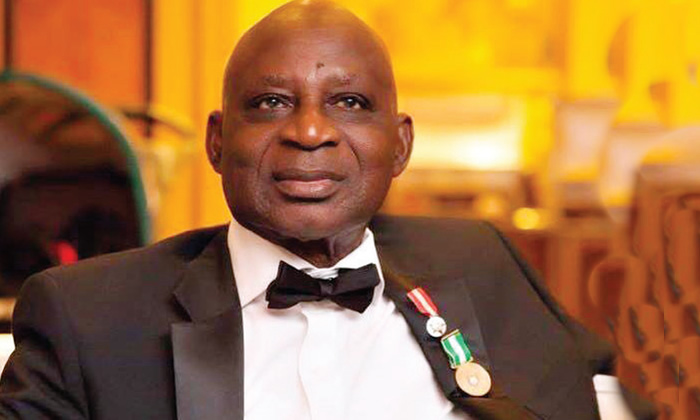
A former senator and elder statesman, Femi Okurounmu, has declared that Nigeria is increasingly becoming ungovernable under its current political structure, warning that superficial reforms have failed to address the country’s deepening security and governance challenges.
Speaking during an interview on a public affairs programme in Ogun State, Okurounmu argued that structural imbalances and decades of ineffective decentralisation have left the country vulnerable to persistent insecurity and weak governance.
He maintained that while the introduction of state policing could help curb insecurity, it remains only a partial solution to a much deeper problem.
“Nigeria as one country cannot work… there’s no shame in admitting that,” he said, calling for an urgent national conversation on the country’s future and governance structure.
The elder statesman criticised existing reforms such as local government autonomy, noting that they have largely benefited political office holders rather than improving the lives of ordinary citizens.

According to him, the autonomy has led to increased perks for local officials without corresponding development at the grassroots level, questioning the real impact of such policies on poverty and public welfare.
Okurounmu, a chieftain of the pan-Yoruba socio-political group Afenifere, warned that security challenges would persist even with state policing if deeper structural issues remain unresolved.
“State policing is a good measure… but it is not the final solution,” he said, stressing the need for a comprehensive and inclusive security framework.
He further argued that political interests have historically stalled the implementation of state policing, leaving many communities exposed to attacks.
The former lawmaker also touched on international involvement in Nigeria’s security landscape, suggesting that external interventions have at times become necessary due to internal weaknesses in addressing threats.
On governance, Okurounmu described Nigeria’s democratic system as flawed, alleging that key institutions lack independence and are often manipulated to favour those in power.
“Every election has been rigged… the judiciary is not independent, the legislature is not independent,” he said, expressing concern over the integrity of democratic processes.
He also condemned the monetisation of politics, linking vote-buying to widespread poverty and systemic failure, which he said undermines the credibility of elections.
Beyond security, Okurounmu emphasised the need for improved governance, infrastructure, and service delivery as essential components of national stability.
“If government can provide electricity, education, healthcare, and economic opportunities, people will care less about ethnicity or origin,” he noted.
He traced Nigeria’s structural challenges to historical foundations, particularly the 1914 amalgamation, urging leaders to reconsider the country’s current framework in light of its diversity.
Okurounmu concluded that while state policing is necessary, it must be part of broader reforms focused on equity, accountability, and effective governance.









Leave a comment