


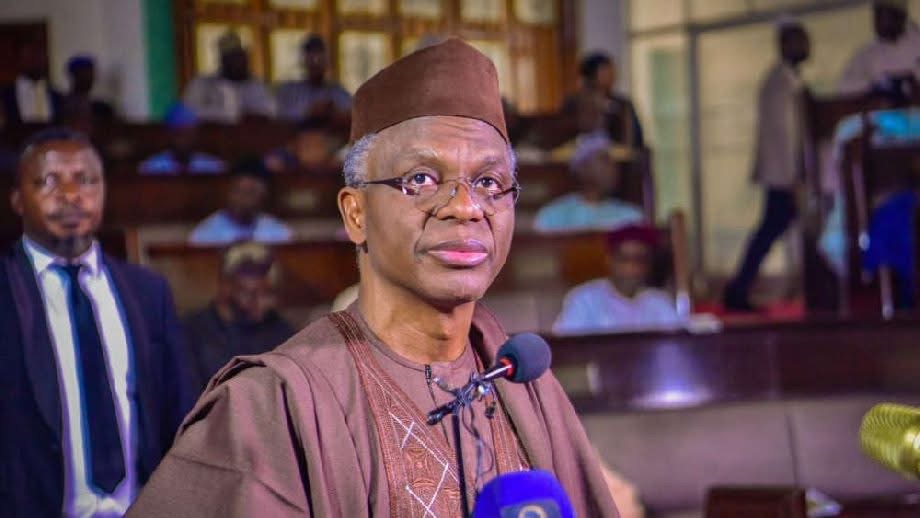
Former Kaduna State governor, Malam Nasir El-Rufai, has once again ignited controversy by amplifying claims that President Bola Ahmed Tinubu is “waging a quiet war against the Muslim North.” His decision to share Bello Doka’s article pushing this narrative has revived long-standing debates about religious politics and the manipulation of northern sentiments.
According to Sa’adiyyah Adebisi Hassan, El-Rufai’s sudden defence of “Muslim North” is less about the region’s wellbeing and more about personal political frustration. She argues that his public posturing is predictable, given his history of exploiting religious identity whenever he is outside the corridors of power.
Hassan notes that El-Rufai did not raise concerns about northern Muslim dominance when former President Muhammadu Buhari appointed predominantly northern Muslim security chiefs. Yet, under that arrangement, banditry peaked, Kaduna suffered repeated attacks, several northern states became ungovernable, and communities were devastated.

She questions why the same El-Rufai who once insisted that competence—not religion—should drive appointments is now shifting the narrative because President Tinubu is diversifying federal positions to include previously marginalised groups within the North, especially the Middle Belt and Northern Christians.
She also reminds readers that El-Rufai previously dismissed complaints about religious imbalance in Kaduna during his tenure, often undermining voices—Muslim and Christian alike—who raised concerns.
For Hassan, Tinubu’s approach represents a necessary correction of years of internal regional imbalance. She argues that the President is not marginalising the North but rather ensuring that the region’s diversity is reflected in government appointments, unlike previous administrations that concentrated power within a single religious bloc.

She contends that the North is awakening to the dangers of emotional manipulation rooted in religious sentiment. Nigerians, she says, now demand infrastructure, security, economic growth and competent leadership—not sectarian rhetoric.
Hassan concludes that if El-Rufai intends to field a candidate in 2027, he should present policies, achievements and clear governance records rather than attempting to mobilise the region through religious identity politics. She warns that Nigeria has moved past the era of political actors using religion as a shortcut to power.










Leave a comment