


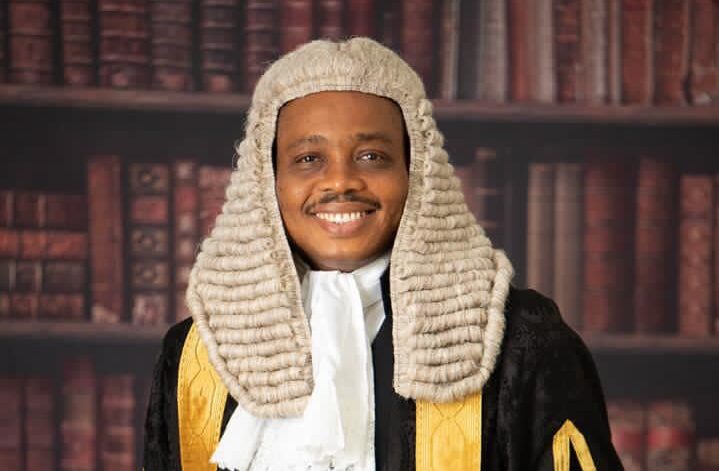
The President of the Nigerian Bar Association, Afam Osigwe, has issued a strong call to state governors across the country to immediately comply with the Supreme Court judgment granting financial autonomy to local governments, warning that continued resistance threatens Nigeria’s democratic foundation.
Speaking during an exclusive interview on Frontline, a current affairs programme on Eagle 102.5 FM in Ilese-Ijebu, Osigwe said the refusal of some state governments to release funds directly to local councils reflects a deeper governance problem — a culture of disregard for constitutional authority and judicial decisions.
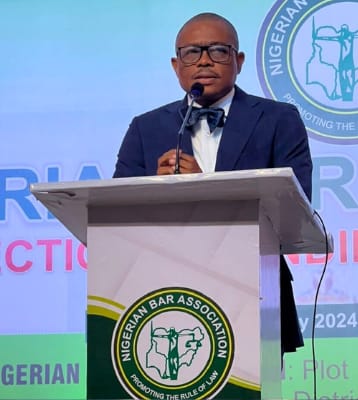
He emphasized that the issue goes beyond financial control, noting that ignoring the apex court’s ruling weakens public trust in institutions and undermines the rule of law.
The NBA president was referring to the landmark judgment delivered by the Supreme Court of Nigeria on July 11, 2024, which affirmed the financial independence of Nigeria’s 774 local government areas. The ruling directed that allocations from the Federation Account must be paid directly to local governments and not routed through state governments or controlled accounts.
Despite the judgment and repeated appeals from Bola Ahmed Tinubu, Osigwe observed that several state governments have yet to fully implement the directive, continuing to control council funds at the state level.
According to him, enforcing the court’s decision is now a constitutional duty for the federal government and relevant authorities.
“If the law says the money should go directly to the local government accounts and the Supreme Court has reaffirmed it, then ignoring that decision says a lot about our attitude to governance and judicial pronouncements,” he said. “The federal government and the Attorney General have a responsibility to ensure compliance.”
Osigwe argued that Nigeria’s constitutional challenges are not necessarily rooted in poorly written laws but in the attitude of leaders and institutions toward respecting them.
In his view, even the best constitution will fail if those responsible for implementing it choose to ignore its provisions.
He explained that the effectiveness of any legal framework ultimately depends on how political actors, judicial officers, and citizens respond to it, stressing that laws do not enforce themselves.
According to him, Nigeria’s constitution already contains extensive provisions capable of guiding governance if properly respected and implemented. He noted that the country’s progress depends largely on how leaders and citizens engage with these provisions and whether they are willing to uphold them in practice.
Osigwe also addressed broader issues affecting governance and the justice system, including the importance of judicial independence. Commenting on the controversy surrounding the Chief Judge of the Federal High Court, John Terhemba Tsoho, he said any investigation involving a judicial officer must follow due process through the National Judicial Council before other agencies intervene.
He warned that bypassing established judicial disciplinary procedures could weaken the independence of the judiciary, which he described as a cornerstone of democratic governance.
On electoral reforms, the NBA president acknowledged that the recently amended electoral framework introduced some improvements but argued that the country missed an opportunity to strengthen transparency, particularly in the electronic transmission of results. He maintained that laws alone cannot guarantee credible elections unless political actors are willing to apply them responsibly.
Osigwe said public confidence in elections depends not just on legislation but on the conduct of stakeholders, including political parties, electoral officials, and institutions responsible for enforcing the law.
He also spoke on police reform, stressing the need for modernization through technology, data management, and improved investigative processes.
According to him, building a reliable national crime database and strengthening forensic capacity would significantly improve law enforcement and public safety.
The NBA president further weighed in on the debate over state policing, expressing cautious support while warning that strong safeguards must be introduced to prevent abuse by political authorities. He noted that while Nigeria’s growing security challenges may justify decentralised policing, proper checks and balances are necessary to protect citizens and opposition groups.
Concluding his remarks, Osigwe returned to the issue of local government autonomy, insisting that compliance with the Supreme Court ruling is essential for strengthening grassroots governance and ensuring that democracy functions effectively at the local level.
He urged governors who have not yet implemented the judgment to do so without delay, emphasizing that respect for the constitution, judicial decisions, and institutional processes remains critical to Nigeria’s progress.












Leave a comment