


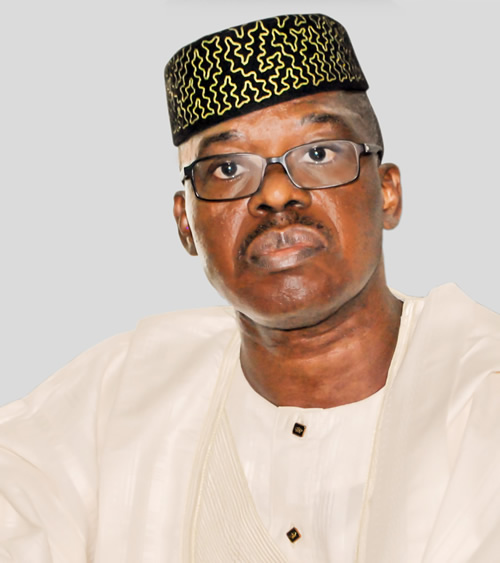
Former Ekiti State Governor, Segun Oni, has warned that Nigeria’s democracy is drifting toward opportunism, urging urgent reforms to strengthen political parties and restore institutional discipline.
Speaking during an interview on Frontline, a current affairs programme on Eagle FM 102, Oni expressed concern over what he described as a gradual erosion of democratic values under the guise of multi-party politics.

Oni argued that the proliferation of political parties is weakening governance rather than strengthening it.
“We are regressing. Too many political parties only create opportunism instead of deepening democracy,” he said.
He called for a structured review of Nigeria’s party system, suggesting performance-based benchmarks to determine which parties remain active.
On the economy, Oni acknowledged improved macroeconomic stability, noting that consistent exchange rate patterns and policy direction have boosted investor confidence.
However, he stressed that stability alone does not translate into prosperity for citizens.
“Investors may see stability, but Nigerians are still facing high living costs. The value of the naira and inflation remain critical concerns,” he noted.
The former governor linked economic challenges to insecurity, particularly in the agricultural sector.
According to him, reduced farm productivity due to insecurity continues to drive inflation and limit domestic output.
“When farmers cannot work freely, it affects food supply, inflation, and the entire economy,” he said.
He urged citizens to support security agencies with credible intelligence while commending ongoing efforts by the military.
Oni acknowledged that recent economic reforms, including subsidy removal and exchange rate adjustments, are structurally necessary but have placed significant pressure on citizens.
“The hardship will not disappear overnight. Government must find ways to cushion the impact,” he said.
While cautious about direct cash palliatives, he advocated structured intervention through institutions such as schools and community organisations.
A major highlight of his remarks was the call for reform of Nigeria’s political party system.
Oni proposed a periodic evaluation mechanism that would deregister underperforming parties based on electoral results.
“If a party cannot win meaningful votes, we must ask why it should continue to exist,” he argued.
He maintained that democracy should be guided by structure and accountability, not unchecked proliferation of weak platforms.
Commenting on emerging opposition alliances such as the African Democratic Congress (ADC), Oni said political realignments are natural but often driven by leadership failures within existing parties.
“The real issue is not forming new parties but managing existing ones effectively,” he said.
Oni reaffirmed his membership of the All Progressives Congress (APC), dismissing concerns about shifting political alliances.
He concluded by urging comprehensive reforms to Nigeria’s democratic framework, including stricter party registration rules and improved accountability.
“If we don’t fix the system, we will keep recycling the same problems under different names,” he warned.








Leave a comment