


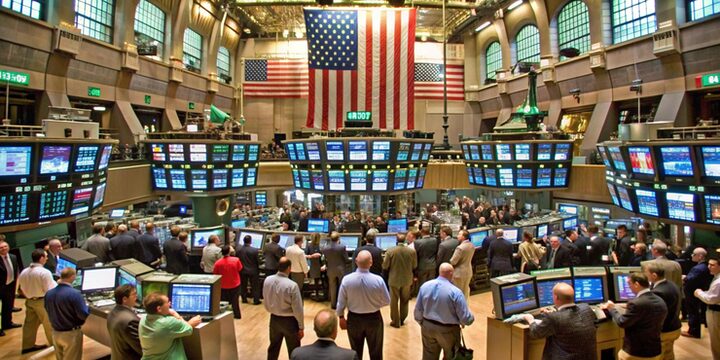
US stocks fell on Thursday as renewed concerns over the Iran war sent oil prices higher, adding to inflation worries and increasing economic and political pressure on President Donald Trump ahead of next month’s congressional elections.
The S&P 500 fell about 0.5%, the Dow Jones Industrial Average declined 0.3%, while the Nasdaq Composite dropped 0.9%, as Brent crude rose 3.8% to about $104.08 a barrel. The rise in oil prices came amid continuing uncertainty over the conflict with Iran and the security of energy supplies from the Middle East.
Oil prices had surged even more sharply earlier in the day, with Brent briefly moving above $105 a barrel as reports of possible renewed US military action against Iran heightened fears of further supply disruptions. The market later pared some of those gains after Trump said the United States would not attack Iran before the November midterm elections.
The renewed volatility comes at a sensitive time for the US economy. Higher energy costs are feeding inflation concerns, while US Treasury yields have also climbed to levels not seen in more than two decades, putting additional pressure on equities and raising borrowing costs.
For American consumers and businesses, diesel prices have become a particularly serious problem. The price of diesel reached about $6.50 per gallon last month, a record high, with the disruption of energy and fuel supply routes linked to the Iran conflict and other geopolitical tensions.
The fuel crisis is also becoming a political liability for Trump and his Republican Party. Republicans currently hold narrow majorities in both the Senate and House, while recent polling shows Democrats with an advantage in the national congressional vote and competitive Senate races.
A Reuters/Ipsos poll released Thursday also found that voters who supported Kamala Harris in the 2024 presidential election were significantly more enthusiastic about voting in November than Trump’s 2024 supporters, another potential warning sign for Republicans.
Trump has already taken steps aimed at easing fuel costs. On Monday, he signed an executive order expanding access to tax-exempt diesel, while the G7 and International Energy Agency have moved to release emergency oil and diesel reserves in an effort to ease tight global supplies.
The latest market decline therefore reflects more than a routine pullback from record highs. Investors are weighing the combined impact of geopolitical uncertainty, rising energy costs, inflation, high interest rates and the prospect of weaker economic conditions.
With the midterm elections approaching on November 3, continued increases in fuel prices could make affordability an even more important issue for voters and deepen the political challenge facing Trump and Republicans.









Leave a comment