


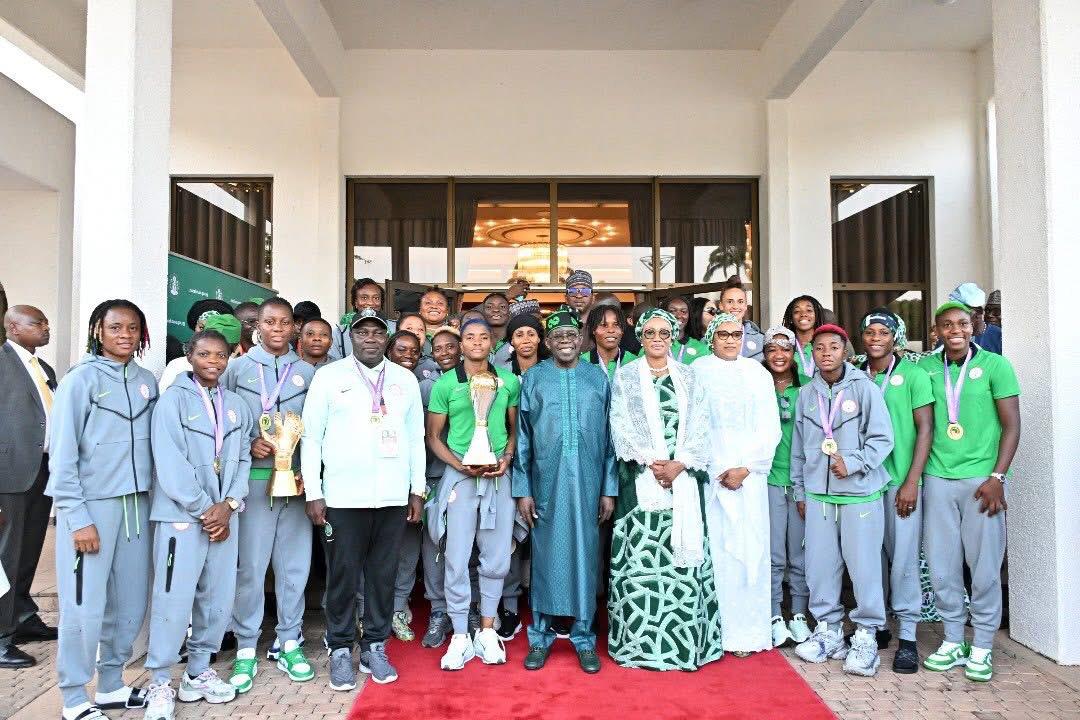
Following President Bola Tinubu’s reception and financial reward to Nigeria’s Super Falcons, reactions across the country have highlighted both appreciation and deeper reflections on the nation’s priorities.

One of the most notable voices in this discussion is Bayo Onanuga, Special Adviser to the President on Information and Strategy, who in defense of the presidential gesture, pointed out that if Big Brother Naija (BBNaija) — a privately run entertainment show — can offer its winner a ₦150 million grand prize, how much more deserving are national athletes who have brought international recognition and pride to Nigeria.
While BBNaija holds cultural and entertainment value, Onanuga’s comparison draws attention to the need to prioritize those who embody national excellence. The Super Falcons have consistently demonstrated discipline, skill, and the resilient Nigerian spirit, representing the country with distinction on the world stage.

President Tinubu’s reward to the team is not merely a financial token; it is a strong statement that Nigeria values excellence, honors hard work, and celebrates patriotism. It also sends a clear message to aspiring talents across the country — that national service, particularly in the realm of sports, is appreciated at the highest level.
However, amid the celebration, a deeper and necessary conversation is emerging. Observers and sports stakeholders have raised concerns about the lack of a structured retirement and welfare plan for national athletes. While immediate cash rewards serve as recognition, many athletes face uncertain futures once their careers end — often retiring young, without steady income, healthcare, or opportunities for reintegration into the workforce. Planning for their long-term wellbeing would be a more sustainable and impactful way of supporting those who have given their best years in service to the nation.
Establishing a retirement and welfare scheme for athletes would provide financial stability, health security, and peace of mind. It would also serve as motivation for the younger generation to take sports seriously, knowing their country supports them beyond their playing years. Furthermore, retired athletes possess invaluable experience and insight that can be harnessed through coaching, mentorship, and sports administration roles. Integrating them into these roles would strengthen Nigeria’s sporting institutions and ensure continuity of knowledge.
Caring for national heroes beyond their active years also enhances the country’s image as one that values its citizens’ contributions. It reflects a society that not only celebrates success in the moment but also protects and honors those who help shape its identity on the global stage. Many former athletes battle lingering injuries or face psychological stress due to abrupt career ends. A proper support system would address these needs and uphold their dignity.

In conclusion, Bayo Onanuga’s reference to the BBNaija prize is a timely reminder of the value we assign to different aspects of our national life. If an entertainment platform can reward a reality show winner with ₦150 million, then surely, it is fitting for the president to reward women who have lifted the Nigerian flag with courage and excellence. President Tinubu’s gesture to the Super Falcons is not only commendable, but necessary.
Yet it also highlights the need to go further — to build a system that ensures our athletes are not only celebrated in their prime, but also supported for life.








Leave a comment