


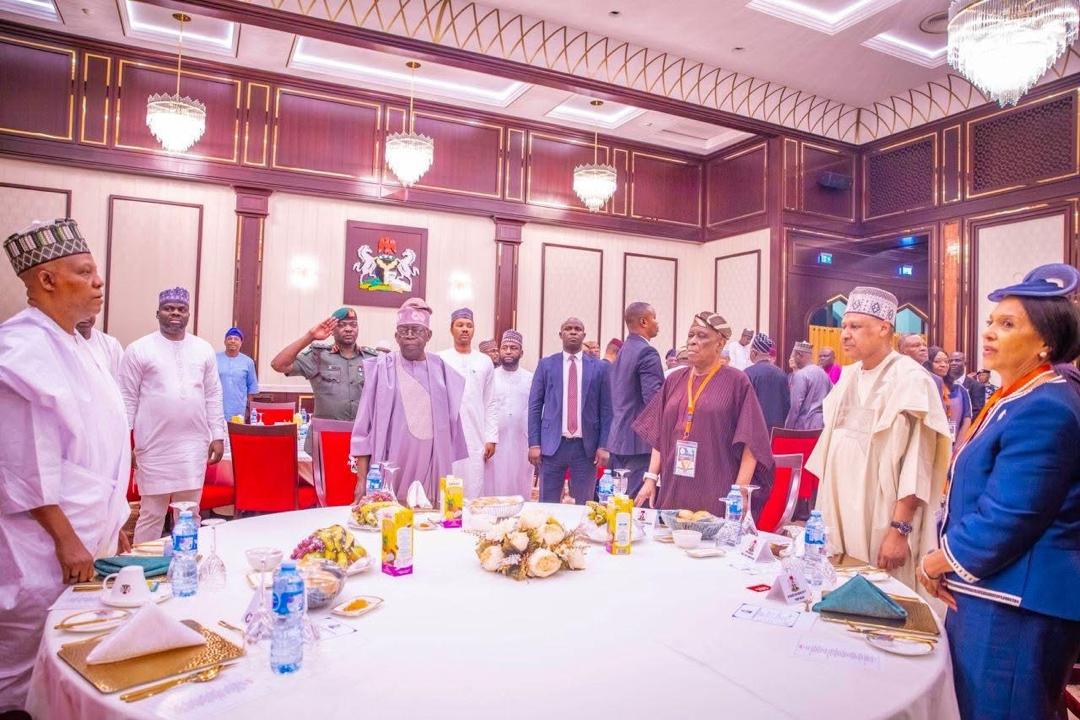
President Bola Ahmed Tinubu has pledged to review tariffs affecting newspaper production materials and broadcasting equipment in a move aimed at supporting Nigeria’s media industry and strengthening its role in democratic governance.
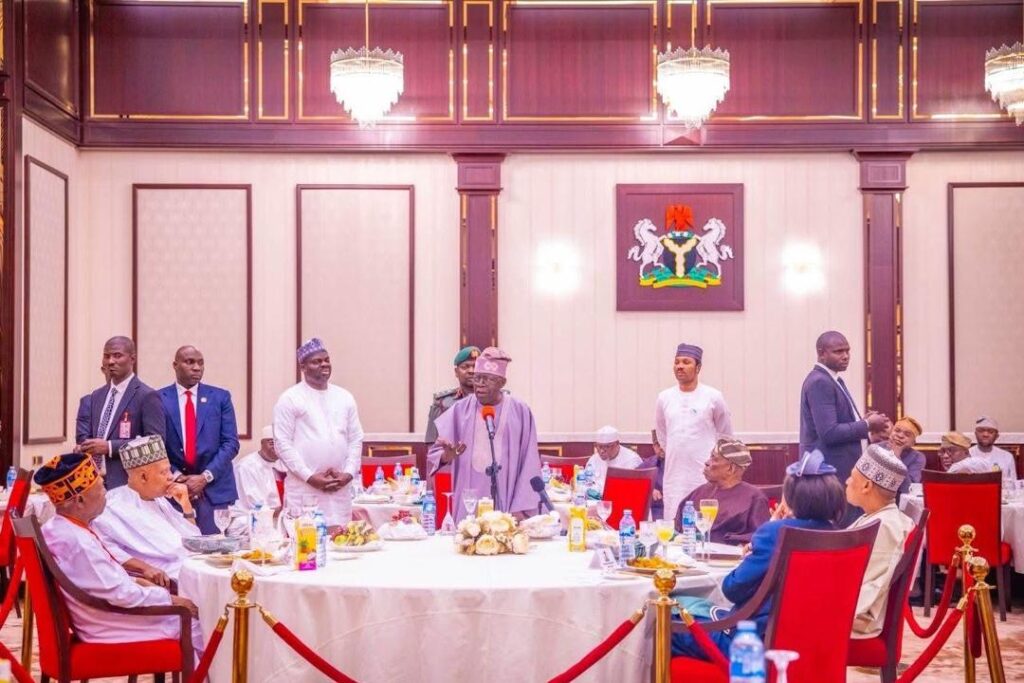
The assurance came during a meeting at the State House in Abuja where the president hosted leaders of major media organisations, including representatives of the Nigerian Press Organisation (NPO), Newspaper Proprietors’ Association of Nigeria (NPAN), Broadcasting Organisations of Nigeria (BON), Nigerian Guild of Editors (NGE) and the Nigeria Union of Journalists (NUJ).
The engagement focused on the challenges facing the media sector, particularly rising operational costs linked to import duties on newsprint and broadcasting equipment.
Speaking during the meeting, President of the Nigerian Press Organisation and publisher of BusinessDay, Frank Aigbogun, appealed for federal government intervention to reduce tariffs that have significantly increased the cost of newspaper production and broadcast operations.
Aigbogun also raised concerns about the growing influence of global technology companies that rely on editorial content generated by Nigerian media organisations without providing compensation.
According to him, the development threatens the financial sustainability of the industry and the livelihoods of journalists across the country.
Responding to the request, President Tinubu assured media executives that the matter would receive attention.
“We discussed issues of tariffs this afternoon. What I cannot report back here is whether I took action in the areas that affect you. But if I missed that, I will go back to rectifying whatever was necessary,” the president said.
During the meeting, Tinubu acknowledged the economic difficulties faced by Nigerians and reiterated that the reforms undertaken by his administration were necessary to stabilise the country’s finances.
According to the president, the government inherited significant economic challenges but had taken decisive steps to prevent the nation from sliding into deeper financial crisis.
He noted that leadership often requires making difficult decisions at critical moments, even when such choices attract criticism.
Tinubu added that he welcomed constructive criticism from the media, describing it as an essential component of democratic governance.
“As an avid reader of Nigerian newspapers, I take the criticisms in good faith because all of us want the best for this country,” he said.
The president also urged media practitioners to extend their oversight role beyond the federal government by demanding accountability from state and local governments.
He noted that recent fiscal reforms have increased revenue allocations to subnational governments, making it necessary for the media to monitor how such resources are utilised.

Tinubu stressed that transparency and accountability at every level of governance are essential for national development.
Nigeria’s Minister of Information and National Orientation, Mohammed Idris, also addressed the gathering, expressing confidence in the president’s leadership and commitment to national progress.
He encouraged journalists and media organisations to continue performing their constitutional duty responsibly while ensuring that governments remain accountable to citizens.
Veteran journalist and former Ogun State governor, Olusegun Osoba, who serves as the Grand Patron of the Newspaper Proprietors’ Association of Nigeria, commended Tinubu for implementing bold economic reforms.
Osoba specifically praised the establishment of the Nigeria Revenue Service and the introduction of the National Single Window policy, describing them as initiatives capable of strengthening the country’s revenue base.
He also applauded the president’s call for state governors to ensure that federal allocations are effectively utilised to improve living conditions at the grassroots level.
The meeting highlighted renewed efforts to strengthen collaboration between government institutions and the Nigerian media industry.
Stakeholders at the gathering emphasised that a stable and independent media sector remains vital for democratic accountability, public enlightenment and national development.
With the federal government now considering tariff adjustments, industry leaders hope the engagement will translate into concrete policies capable of sustaining media organisations and protecting journalism jobs across the country.









Leave a comment