


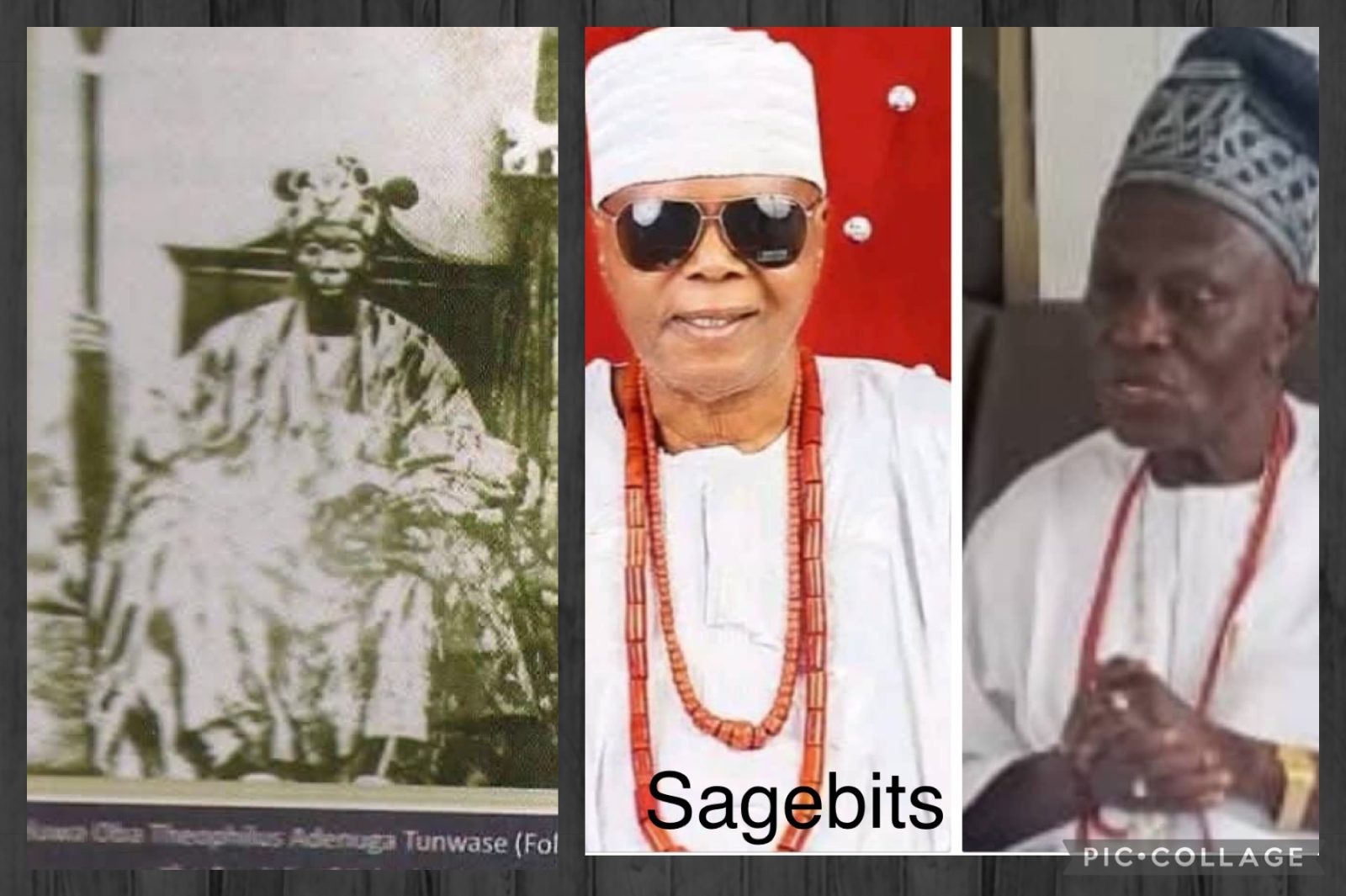
The contest for leadership of the Fusengbuwa Ruling House, one of the royal lineages eligible to produce the next Awujale of Ijebuland, has taken a dramatic turn after weeks of accusations, legal filings, and sudden realignments.
On September 17, 2025, Otunba Ajidagba Adedokun, of the Adeberu royal family of the Fusengbuwa lineage, filed a suit at the Ijebu-Ode High Court against Otunba Abdulateef Adebayo Owoyemi, accusing him of impersonating the Olori-Ebi (head of the family). Adedokun argued that Owoyemi, a native of Ikoro-Ekiti, had no ancestral ties to the Ile-Nla compound in Agunsebi, Ijebu-Ode—the historical seat of the Fusengbuwa dynasty. He cited an earlier ruling of Justice Asenuga of High Court II and claimed Owoyemi had admitted his Ekiti origin under oath.
Adedokun, joined by Prince Adeleke Adeyemi of the Olufadi royal family and Prince Ademola Sonaya of the Ayora/Tunwase royal family, insisted that the Fusengbuwa house is composed of eight branches: Olufadi, Ayora/Tunwase, Shenowo, Okuyandewo, Oshinuga, Adekenu, Adebiyi, and Adeberu.
But within 48 hours of the lawsuit, the landscape shifted. On September 19, Adedokun reportedly reconciled with Owoyemi in a private meeting, recognizing the same man he had branded an impostor as his leader and Olori-Ebi. The sudden volte-face has drawn criticism, with observers describing it as evidence of a shaky alliance held together only by opposition to the Folagbade descendants, who insist they remain the legitimate custodians of the Fusengbuwa throne rights.

The descendants of Oba Folagbade Adenuga, the last Awujale from the Fusengbuwa line, argue that the crisis is the result of attempts by other factions to erase their rightful claim.
During the week, Omoba Adekunle Adenuga, secretary of the Folagbade’s Fusengbuwa house, appeared on NTA Ijebu-Ode’s Egbeyewo programme, where he challenged the factions to present their claims openly under inquiry. He emphasized that succession in Ijebuland is governed by custom and enabling laws that prioritize inheritance from the last king in the ruling house, not retrospective claims to distant ancestors.
“Trying to lay something on nothing is the futility of their wildest dream,” Adenuga declared, pointing to contradictions in the unified front of Ajidagba and Owoyemi.
The Folagbade camp has also raised ten pointed questions for the factions, including why the name of Oba Folagbade was omitted from the so-called four ruling classifications (Jadiara, Fusengbuwa, Tunwase, and Bubiade), and why direct descendants of past kings should be sidelined in favor of new, unverified lineages.

Critics note several reversals within the Ajidagba camp:
-
Adedokun once argued that only biological children of Fusengbuwa had rights to succession; today, he accepts a broader definition that admits Owoyemi.
-
Prof. Fassy Yusuf, previously dismissed by Ajidagba’s group as unconnected to the Tunwase branch, is now presented as deputy Olori-Ebi.
-
The new “unified” camp has yet to explain the foundation of its four-family classification or justify the omission of the Folagbade line.
Analysts say these contradictions undermine the credibility of the alliance. “It is less about principle and more about convenience and resources,” one observer remarked, noting Owoyemi’s financial influence in the unfolding struggle.

The court case and subsequent reconciliation highlight deeper issues surrounding the Awujale succession. For many Ijebu sons and daughters, the battle is no longer about two men but about whether ancestral customs will be preserved or rewritten.
The Adenuga-led Fusengbuwa house insists that tradition is clear: kingship is transmitted by inheritance from the last king, not by skipping generations or constructing new family lines. “Nomination of a candidate is by inheritance and never reversed to ancestors,” said Omoba Adebola Bamidele Adenuga, Olori-Ebi of the Folagbade Fusengbuwa house. “We must not desecrate the customs handed down by our fathers.”
As legal battles continue and backroom reconciliations play out, the Kingmakers and government authorities will face pressure to determine which claims rest on custom and which are attempts at hijack.

For now, the unity between Ajidagba and Owoyemi appears fragile, Folagbade’s descendants remain firm, and the Ijebu people watch closely.
In the words of Edmund Burke: “All tyranny needs is for people of good conscience to remain silent.” The question is whether Ijebu will remain silent—or speak in defense of its royal ancestors.












Leave a comment