


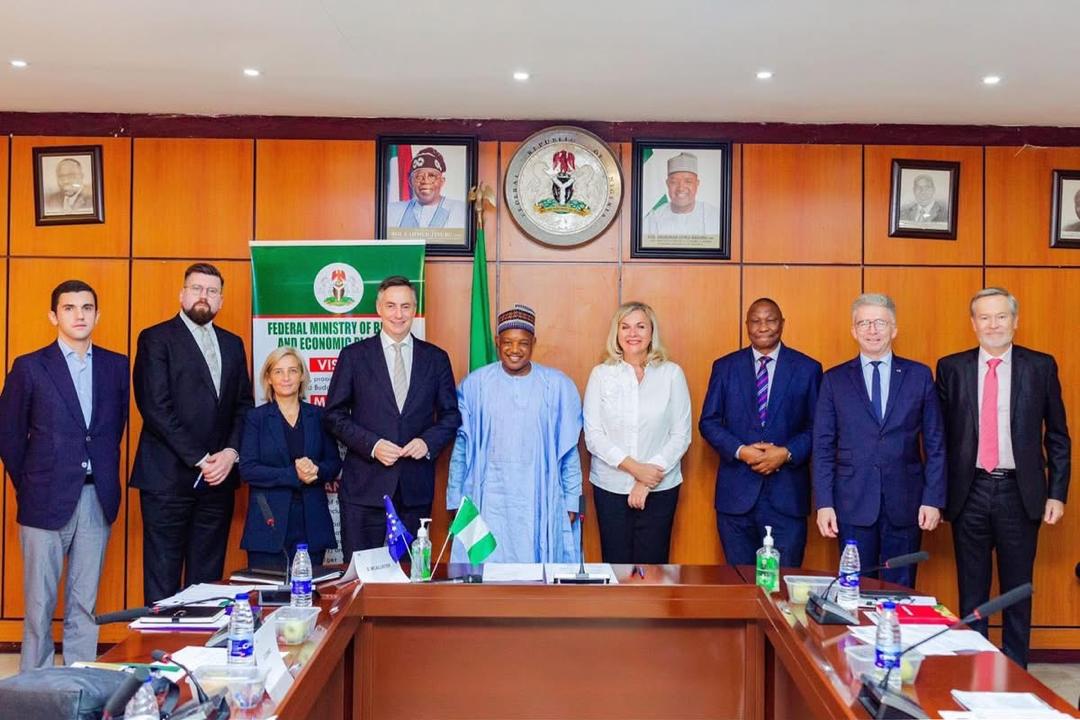
The European Parliament has expressed strong support for Nigeria’s economic reforms and pledged deeper collaboration in trade, investment, and sustainable development under the European Union’s (EU) Global Gateway Investment Strategy.
This affirmation came during a high-level courtesy visit to the Ministry of Budget and Economic Planning in Abuja by a delegation from the European Parliamentary Committee on Foreign Affairs, led by Mr. David McAllister, and accompanied by the EU Ambassador to Nigeria and ECOWAS, Ambassador Gautier Mignot.

The visit symbolized the strengthening partnership between Nigeria and the EU, focusing on shared democratic values, sustainable growth, and regional stability.
“This visit comes at a time when multilateralism is being challenged around the world. It is therefore reassuring that the European Union continues to stand as a beacon of partnership and shared values,” said Senator Abubakar Atiku Bagudu, Nigeria’s Minister of Budget and Economic Planning.
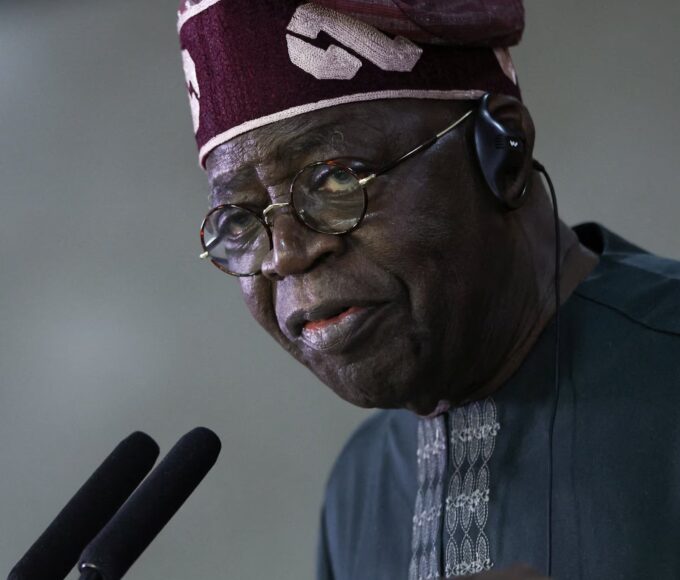
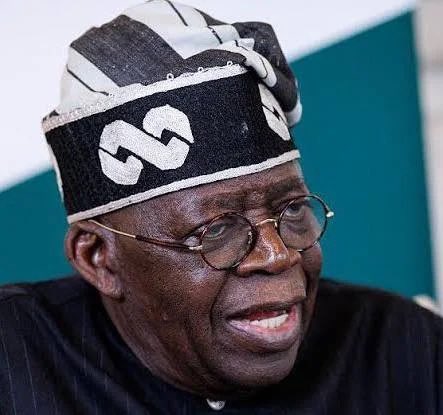
Bagudu reaffirmed President Bola Ahmed Tinubu’s vision of a $1 trillion economy by 2030, emphasizing that about 86 percent of the investment needed to achieve that goal will come from the private sector.
“Our President has set a clear target for Nigeria to achieve a one trillion-dollar GDP by 2030,” he noted. “To realize this, we need partnerships such as ours with the European Union. We do not seek aid; we seek collaboration that empowers both sides.”
He also announced Nigeria’s readiness to ratify the Samoa Agreement, which forms the foundation for deeper cooperation within the Global Gateway framework, ensuring that mutual benefits are derived from sustainable projects and good governance.

Ambassador Gautier Mignot described the visit as “an important milestone” in EU–Nigeria relations, stressing the EU Parliament’s crucial role in shaping global policy and deepening ties with democratic partners like Nigeria.
“Nigeria remains a vital partner for the European Union — not only as an economic hub but as a leader in regional stability and sustainable growth,” Mignot said.
On his part, Mr. David McAllister reiterated the EU Parliament’s commitment to strengthening relations and expanding areas of cooperation.
“We are here to underline one clear message: Nigeria matters,” McAllister stated. “The European Union is one of Nigeria’s largest trade and investment partners, and our goal is to elevate this relationship to the next level.”
He highlighted the EU–Nigeria Trade and Investment Dialogue, launched earlier this year, as a “landmark step” toward boosting manufacturing, clean energy adoption, and economic diversification.
“This is a relationship built not only on trade but on shared democratic values and mutual prosperity,” McAllister added.
Senator Bagudu concluded by reaffirming Nigeria’s determination to advance lawful migration, climate-smart investments, and inclusive growth.
“The European Union remains a critical partner in our pursuit of sustainable development and prosperity,”he said.
Key Takeaways from the EU–Nigeria Dialogue
-
Nigeria’s Economic Target: Achieving a $1 trillion GDP by 2030 under Tinubu’s Renewed Hope Agenda.
-
EU Commitment: Stronger collaboration in trade, energy transition, and democratic governance.
-
Investment Focus: 86% of growth funding expected from private-sector partnerships.
-
Global Gateway Initiative: Framework for sustainable EU investments in developing economies.
-
Samoa Agreement: Nigeria’s forthcoming ratification will deepen multilateral engagement.









Leave a comment