


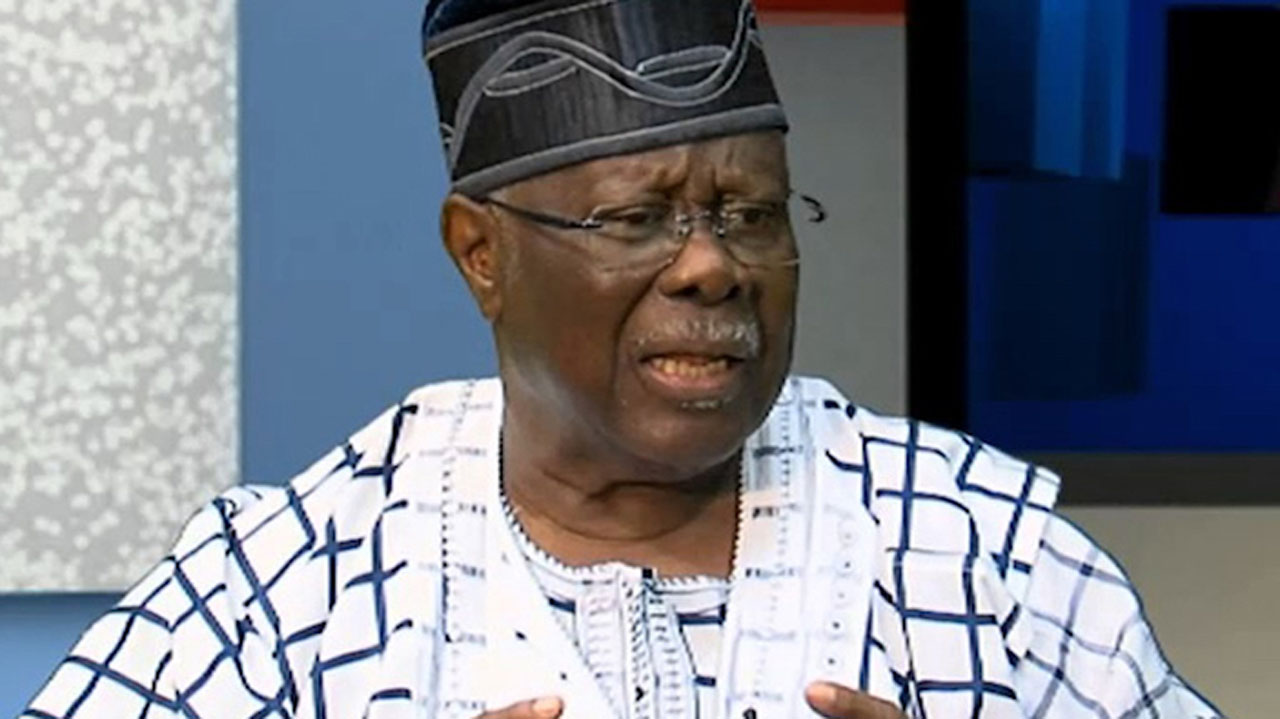
A senior chieftain of the Peoples Democratic Party (PDP), Bode George, has attributed the protracted crisis within Nigeria’s main opposition party to what he described as rising greed, personal ambition, and a growing disregard for the party’s founding principles.
Speaking during an interview on the Frontline programme on Eagle 102.5 FM, the elder statesman argued that the party’s internal divisions did not originate from ideological disagreements but from individuals who ignored the structures established by the PDP’s founding leaders.
According to George, the ongoing leadership battles and factional disputes that have plagued the party since the 2023 general election stem largely from the erosion of discipline and respect for internal rules.
The PDP has faced sustained internal turmoil in recent years, with disputes over leadership control, zoning arrangements and party structures triggering a wave of defections by governors, lawmakers and senior officials.

Among the most significant defections was that of Siminalayi Fubara, who left the PDP for the All Progressives Congress in December 2025 alongside several loyal lawmakers.
The party’s crisis was further intensified following a ruling by the Court of Appeal of Nigeria which nullified the PDP’s November 15–16, 2025 national convention held in Ibadan, Oyo State.
The appellate court upheld an earlier judgment of the Federal High Court restraining the Independent National Electoral Commission (INEC) from recognising the outcome of the convention after determining that the party failed to comply with required constitutional and electoral procedures.
George recalled that the PDP’s zoning arrangement was originally designed to promote fairness and national balance within Nigeria’s diverse political landscape.
According to him, the system ensured that different regions of the country had the opportunity to occupy the presidency and other key offices in a rotational manner.
He explained that the arrangement emerged from consultations among senior political leaders after the military era, particularly under the leadership of Alex Ekwueme and members of the influential G-14 political group.
The zoning framework, he said, helped prevent regional domination and strengthened Nigeria’s democratic stability by giving every geopolitical zone a sense of belonging.
The PDP leader lamented that the system began to unravel when certain individuals prioritised personal ambition above collective party interest.
According to him, the decision by some politicians to contest positions outside the agreed zoning structure triggered a chain of internal conflicts that eventually destabilised the party.
George warned that the consequences of abandoning the party’s founding principles are now visible in the persistent divisions and weakening of the opposition platform.
He added that the PDP’s founding fathers, many of whom have since passed on, would be deeply disappointed by the current state of the party.
PDP’s National Identity Still Unique
Despite the ongoing crisis, George insisted that the PDP remains one of the few political parties in Nigeria structured to reflect the country’s diversity.
He argued that the party was deliberately designed to transcend ethnic and regional divides, allowing individuals from any part of the country to aspire to leadership positions.
According to him, the framework was built on the understanding that no Nigerian chooses their ethnic origin at birth, and therefore political opportunities should not be restricted by tribal considerations.
George stressed that restoring discipline and respect for the PDP’s foundational principles remains the only path to resolving the party’s internal crisis.
He warned that ignoring those guiding rules could further weaken the party and diminish its role within Nigeria’s democratic system.
While acknowledging the depth of the current divisions, he maintained that some members remain committed to defending the values established by the party’s founding leaders.
For George, the choice facing the party is clear: either return to the principles that once sustained its unity or risk further fragmentation within Nigeria’s opposition politics.









Leave a comment