


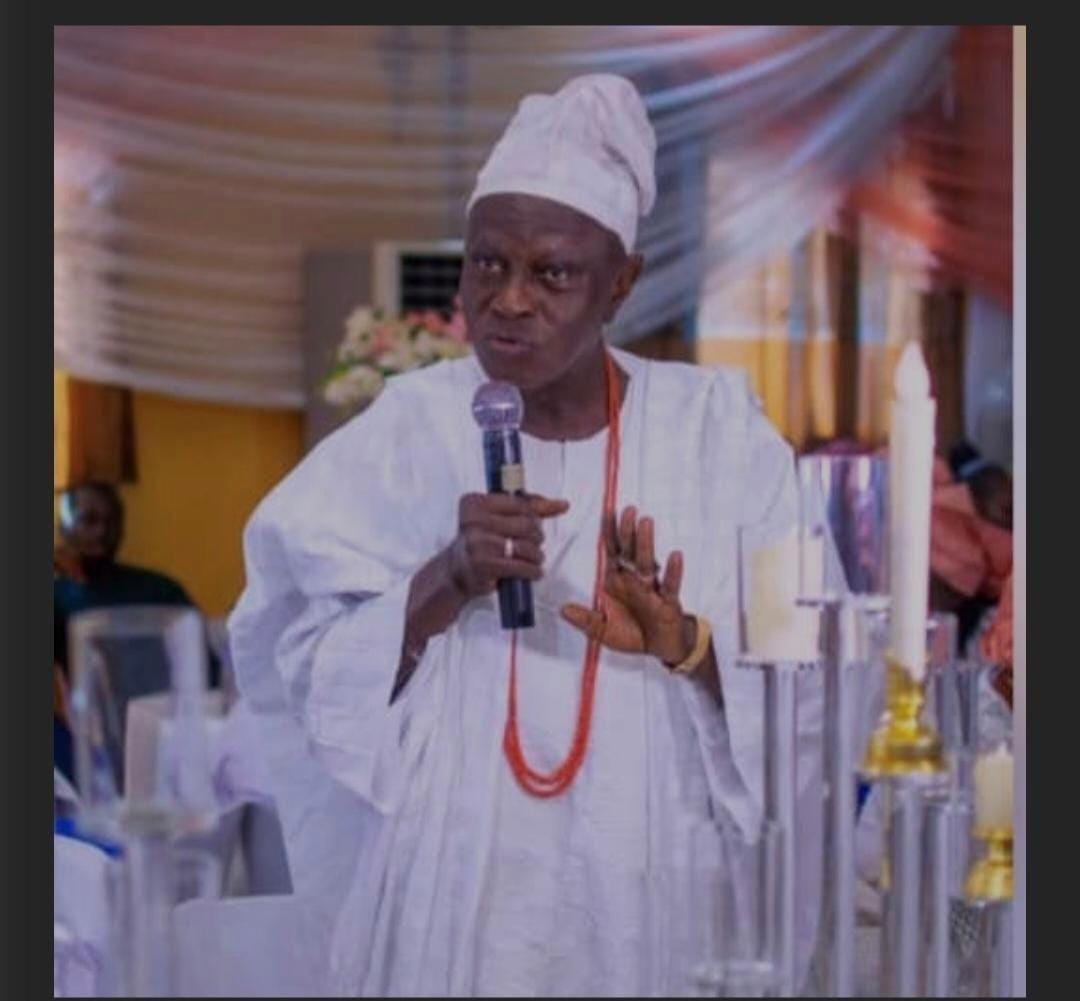
The Chairman (Olori Ebi) of the Fusengbuwa Ruling House of Ijebu-Ode, Ogun State, Abdullateef Abdulaziz Owoyemi, has broken his silence on the controversies surrounding the suspended Awujale succession process, declaring that no political authority is imposing a candidate for the revered throne.
Speaking during an interview on Frontline, a current affairs programme on Eagle 102.5 FM, Ilese Ijebu, Owoyemi stated unequivocally that both President Bola Ahmed Tinubu and Ogun State Governor Dapo Abiodun have not interfered in the process, contrary to widespread speculation within and outside Ijebuland.
According to him, the integrity of the selection process remains intact and cannot be compromised by pressure, lobbying, or inducement.
“I want to make it very clear: neither the President nor the Governor has asked me to impose any candidate. The process must follow tradition, law, and due procedure,” he said.
Suspension of the Awujale Succession
The Ogun State Government suspended the Awujale succession process on January 21, 2026, citing petitions, rising tensions, and security concerns. The decision sparked intense public debate and multiple conspiracy theories regarding political influence over the traditional institution.
However, Owoyemi revealed that neither he nor the Fusengbuwa ruling house has been formally served with any petition related to the process.
“People keep talking about petitions, but up till today, none has been officially presented to me or the ruling house. If there are petitions, where are they?” he questioned.
He explained that during his meeting with the governor, traditional leaders, and other stakeholders, he chose not to escalate the matter by demanding the documents immediately in order to maintain dialogue and calm tensions.
“My priority was to find a solution, not to deepen the crisis,” he said.
Why 95 Aspirants Emerged
Owoyemi also addressed the controversy surrounding the emergence of 95 aspirants for the Awujale stool—an unprecedented number in the history of Ijebu traditional rulership.
According to him, the surge followed the removal of a regulatory framework earlier introduced by the ruling house.
Anticipating a large number of aspirants, the ruling house had introduced a ₦10 million administrative and logistical fee to manage the process, screen serious contenders, and cover expenses related to documentation, security, and traditional rites.
Initially, only 12 aspirants paid the fee, significantly narrowing the field. However, following complaints and political pressure, the Ogun State Government directed that all payments be refunded and that applications be opened without the fee.
“We refunded every kobo within three days. Once the restriction was removed, applications flooded in, and the number quickly rose to 95,” he explained.
Owoyemi noted that critics who now question the number of aspirants were among those who opposed the earlier regulatory measure.“You cannot remove a control system and then complain about the consequences,” he said.
The Fusengbuwa ruling house chairman emphasized that his role does not include screening or disqualifying candidates, noting that the responsibility lies with the kingmakers.
He referenced the provisions of the Obas and Chiefs Law of Ogun State (2021), which limit eligibility to direct descendants of past Awujales from the ruling house.
According to him, only those who can trace their lineage to any of the four previous Awujales from the Fusengbuwa line qualify legally to contest.
“If I attempt to remove anyone’s name myself, it could trigger immediate litigation that might stall the process for years,” he warned.
Controversy Over K1 the Ultimate
Owoyemi also addressed public speculation surrounding Fuji musician K1 De Ultimate, who had been mentioned in connection with the succession contest.
He explained that membership of the Fusengbuwa ruling house is determined through strict genealogical verification and traditional procedures, including endorsement by recognized family heads and traditional oath rites.
According to him, the endorsement attached to K1’s application did not pass the ruling house’s verification process.
“The person who signed as his family head is not recognized by our ruling house.

After investigation and consultation with elders, the conclusion was that he is not a member of the Fusengbuwa ruling house,” he said.
On Political Pressure and Lobbying
Owoyemi acknowledged that given the prestige of the Awujale stool, political lobbying and influence attempts are inevitable. However, he insisted that he rejected all offers and inducements brought before him.
“Politicians and influential individuals came with promises and offers, but I told them clearly that this stool cannot be sold,” he said.
He reiterated that the governor’s primary concern is maintaining peace and ensuring a credible process rather than influencing the outcome.
The Olori Ebi also addressed internal disagreements within the Fusengbuwa ruling house, including leadership disputes involving other prominent members of the family.
He revealed that despite being affirmed as the legitimate Olori Ebi by the Court of Appeal, he deliberately avoided prolonged legal battles in order to prevent further delays in the succession process.
“I chose patience and reconciliation because litigation could stall the selection indefinitely,” he said.
During the programme, several callers from across Ogun State raised concerns about possible political interference, financial impropriety, and the unusually high number of candidates.
Responding to the concerns, Owoyemi maintained that the process remains protected by both tradition and law.
“No politician or powerful individual can override the authority of the kingmakers,” he said.
He also confirmed that attempts were made to influence the process financially but insisted that he rejected them.
The Awujale stool became vacant following the death of Sikiru Kayode Adetona, whose reign lasted more than six decades and significantly shaped the political and cultural influence of Ijebuland.
His passing has triggered one of the most complex traditional succession processes in recent Yoruba history, drawing attention from political leaders, traditional institutions, and the public.
Owoyemi concluded by reaffirming his commitment to protecting the integrity of the process.
“I swore before my ancestors that I would not betray this house. No amount of pressure or money will make me compromise the integrity of this selection,” he said.









Leave a comment