


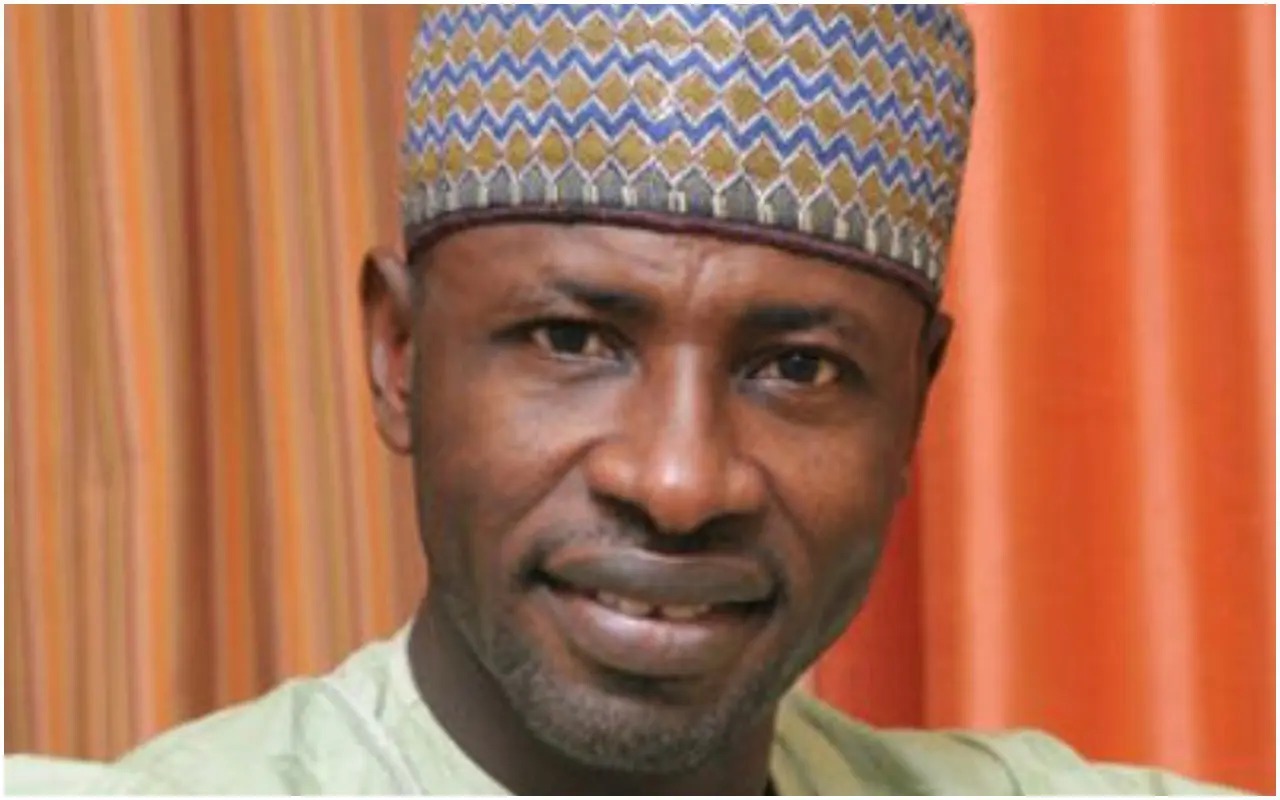
The National Coordinator of the Obidient Movement Worldwide, Dr. Yunusa Tanko, has blamed the growing wave of political realignments within Nigeria’s opposition space on deep-rooted internal crises, prolonged legal disputes, and what he described as systemic destabilisation of opposition political parties ahead of the 2027 general elections.
Dr. Tanko stated this during an interview on Frontline, a current affairs programme aired on Eagle 102.5 FM, Ilese-Ijebu, Ogun State, where he examined the current state of opposition politics and the shifting coalition arrangements among major political actors.
According to him, the instability currently affecting opposition platforms goes beyond ordinary political disagreements, insisting that several parties are facing structural breakdowns capable of undermining long-term electoral preparations.
He argued that many opposition parties have become vulnerable to infiltration, leadership tussles, factional disputes, and court cases, creating an atmosphere of uncertainty that compels political actors to constantly reassess their political future.
“Well, it was very evidently clear that the government of the day has infiltrated most of the political party. You could see what happened to Labour Party, you could see what’s happening to SDP at the moment,” Tanko said.
He further alleged that repeated attempts were made to frustrate the presidential ambition of Labour Party’s former presidential candidate, Mr. Peter Obi, through internal party crises and legal complications.
“You saw quite a number of attempts to deny his excellency Mr. Peter Obi the ticket to run for elections and so therefore the Supreme Court judgment that came in not too long ago actually gave a stamp of authority into our claims because we helped in building a new political party after regrettably leaving the Labour Party,” he added.
Tanko maintained that the recurring crises within opposition parties are not isolated incidents but part of a broader pattern where legal disputes and factional struggles weaken party structures and disrupt continuity.
According to him, political actors seeking stable platforms for electoral participation are often forced to abandon parties engulfed in unresolved litigation and internal instability.

He also defended Peter Obi’s history of political movement across different parties, insisting that the former Anambra State governor has consistently left political platforms only when they became compromised or excessively transactional.
Tanko noted that Obi’s exits from parties such as APGA, PDP, Labour Party, ADC, and eventually the Nigeria Democratic Congress (NDC) were informed by governance disagreements, internal leadership disputes, hostile litigations, and concerns over political fairness.
He explained that Obi’s movement from the African Democratic Congress to the Nigeria Democratic Congress in 2026 was largely triggered by unresolved legal battles and alleged sabotage within the ADC coalition structure.
Similarly, Tanko referenced the political trajectory of former Kano State governor, Rabiu Musa Kwankwaso, whose repeated party defections he linked to struggles for political space, internal democracy, and the preservation of the Kwankwasiyya movement.
According to him, the collapse of the opposition coalition within the ADC was worsened by leadership disputes, conflicting presidential ambitions, and court cases that paralysed the party.
He alleged that some of the legal disputes confronting the coalition were orchestrated to destabilise opposition forces ahead of the 2027 elections.
“And when we got to the NDC there were litigations that the Supreme Court said that yes they recognized the leadership of Senator David Mark and then they’re saying that we should go back to the Federal High Court for adjudication on issues that were already being raised,” he stated.
“This turns a red flag and we felt that before we could finish all this adjudication we would have been caught by the wing and we would end up not even having candidates,” Tanko added.
The Obidient Movement coordinator argued that prolonged litigation creates uncertainty for candidates and political parties operating within strict electoral timelines.
He stressed that no serious political contender would willingly remain in a platform where unresolved court cases could threaten candidacy or party legitimacy close to elections.
“Who will want to go into an election with a court case hanging on top of his head?” he queried.
Tanko also expressed concerns about the unpredictability of judicial outcomes in political matters, insisting that legal uncertainty now plays a major role in shaping political decisions and coalition strategies within opposition circles.
“Especially now that we are not so sure of the way our judiciary will act even though we trust that there are some of them who work very hard, but then the situation is not too appealing and not too secure for a genuine candidate to remain in one place where he will be completely annihilated even when the game has not started,” he said.
He maintained that the movement of opposition figures across political platforms should not be interpreted as betrayal or opportunism but as survival strategies within unstable political environments.
“Most of these reasons are some of the reasons that he and his counterpart, Excellency Rabiu Musa Kwankwaso, took that courageous decision to move to the NDC for security, safety and the opportunity to run for election in 2027,” Tanko explained.
The Obidient Movement leader further argued that coalition-building has become unavoidable for opposition parties seeking relevance and electoral competitiveness ahead of the next general elections.
According to him, fragmentation within opposition ranks would only weaken their collective strength against the ruling party.
Tanko also pointed to the Social Democratic Party (SDP) as another example of a platform currently battling internal crises and factional disputes.
“Yes, it was done and who would have thought that the SDP would have similar problem as we are having now. Does that mean that some of the leaders there did not do due diligence?” he asked.
He alleged that leadership disputes within the SDP had already produced factional divisions and conflicting claims to party leadership.
“As of this morning, Shehu Gabam by the court has been returned as the chairman of the party. He was also arrested this morning. So as we speak right now the SDP has two factions,” Tanko claimed.
He equally referenced tensions within the ADC, arguing that litigation and leadership contests have become recurring instruments of instability within opposition structures.
“Nobody would have thought that Nafiu Bala will come up with an obnoxious attribution and going to court and the court granting him that opportunity to be heard,” he stated.
Tanko insisted that the repeated crises across opposition parties validate the position of the Obidient Movement that political realignment is largely driven by structural instability rather than personal ambition.
Dr. Tanko strongly rejected narratives portraying Peter Obi as politically disloyal, insisting that such arguments fail to appreciate the realities of Nigeria’s unstable party system.
He maintained that Obi’s political decisions are guided by principles, transparency, and the search for credible and stable political structures capable of supporting democratic competition.
“No, you see he who seeks for everything must come with clean hands. Mr Peter Obi has shown his interest to run for elections as a presidential candidate. So every process that will give him that particular opportunity must be seen to be done clearly with all level of responsibility,” he said.
Tanko argued that Obi has consistently supported party processes financially and politically while remaining committed to fairness and internal democracy.
“At this point, his excellency Peter Obi did not in any way betray anybody. In fact, Obi put his money, gave his respect, supported every process of the party and also made it clear that if it is going to be an issue that will make that particular process very unclean, he will have to speak for an alternative,” he added.
He concluded that Obi’s political movements should be understood within the broader context of systemic instability, legal uncertainty, and leadership crises currently affecting Nigeria’s opposition landscape.







Leave a comment