


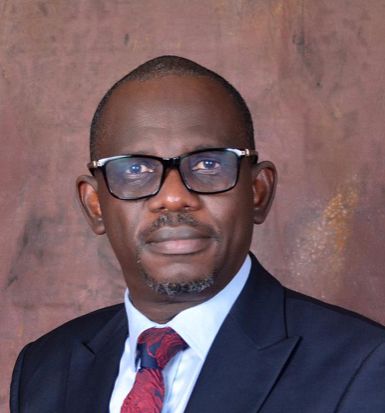
The Ogun State Government has said it will proceed cautiously with the implementation of death sentences, emphasizing that only the most serious and clearly established cases will be considered while others may undergo further review.
The Attorney-General and Commissioner for Justice, Oluwasina Ogungbade, made this known during an exclusive interview on Frontline, a programme on Eagle 102.5 FM in Ilese-Ijebu on Friday.
Speaking more than a year after raising concerns over the growing trend of violent crimes such as ritual killings, kidnapping, and other serious offenses, the Attorney-General said the state remains committed to justice but will carefully examine each case because of the irreversible nature of capital punishment.

According to him, the state currently has a significant number of inmates on death row, partly because executions have not been carried out since 2002.
He explained that the government’s review is not about reopening cases or seeking fresh evidence but about examining the circumstances surrounding each conviction, especially the level of planning and brutality involved.
Ogungbade noted that certain crimes, particularly premeditated ritual killings or child abductions, leave little room for leniency, while other cases involving deaths caused in moments of anger may be considered differently if the offenders are deemed capable of rehabilitation.
He further clarified that the State Prerogative of Mercy Board has not granted pardons to individuals convicted of ritual killings, kidnapping, or sexual offenses, stressing that the government does not want to send mixed signals while confronting such crimes.
The Attorney-General also revealed that a new bill specifically targeting ritual killings has been concluded and will soon be presented to the Ogun State House of Assembly.
He explained that suspects are currently prosecuted under existing murder or corpse-desecration laws, which he described as inadequate for addressing the growing menace.
According to him, the proposed legislation would be the first of its kind in Nigeria and is expected to strengthen deterrence against ritual-related crimes.
Addressing the misuse of law enforcement in civil matters, Ogungbade warned residents against involving the police or the military in disputes such as tenancy disagreements, domestic issues, and land conflicts.
He cited a recent incident in Mowe where a landlord reportedly had a tenant arrested, noting that such issues should ordinarily be resolved through civil courts.
According to him, contract disputes and property disagreements should be handled by lawyers and resolved through proper legal channels rather than criminalizing civil matters.
The Attorney-General added that although some disputes may eventually escalate into criminal offenses, authorities must clearly distinguish between civil and criminal cases, warning that officers who overstep their roles could face disciplinary action.
Ogungbade also highlighted the increasing number of land disputes in Ogun State, attributing the trend partly to the state’s proximity to Lagos and the growing value of land.
He disclosed that the government has prosecuted several offenders, including traditional rulers, as part of efforts to curb illegal land acquisitions and send a clear signal that no one is above the law.
On judicial reforms, the Attorney-General emphasized the need to improve court infrastructure alongside increasing the number of judges to enhance justice delivery.
He stated that Ogun State plans to strengthen its judicial capacity before the end of the administration of Governor Dapo Abiodun, ensuring that the necessary facilities and support systems are available for judges to function effectively.
According to him, an efficient justice system is essential for maintaining peace, attracting investment, and boosting public confidence in governance.
Ogungbade also reiterated the Ogun State Government’s support for the establishment of state police, describing locally controlled policing as crucial for addressing security challenges in communities.
He explained that while the Nigeria Police Force remains central to national security, state police would complement federal efforts by improving response time and strengthening trust between residents and law enforcement agencies.
The Attorney-General assured that Ogun State would continue to collaborate with federal authorities and local communities to ensure that when state policing structures eventually become operational, they will uphold professionalism, accountability, and respect for human rights.








Leave a comment