


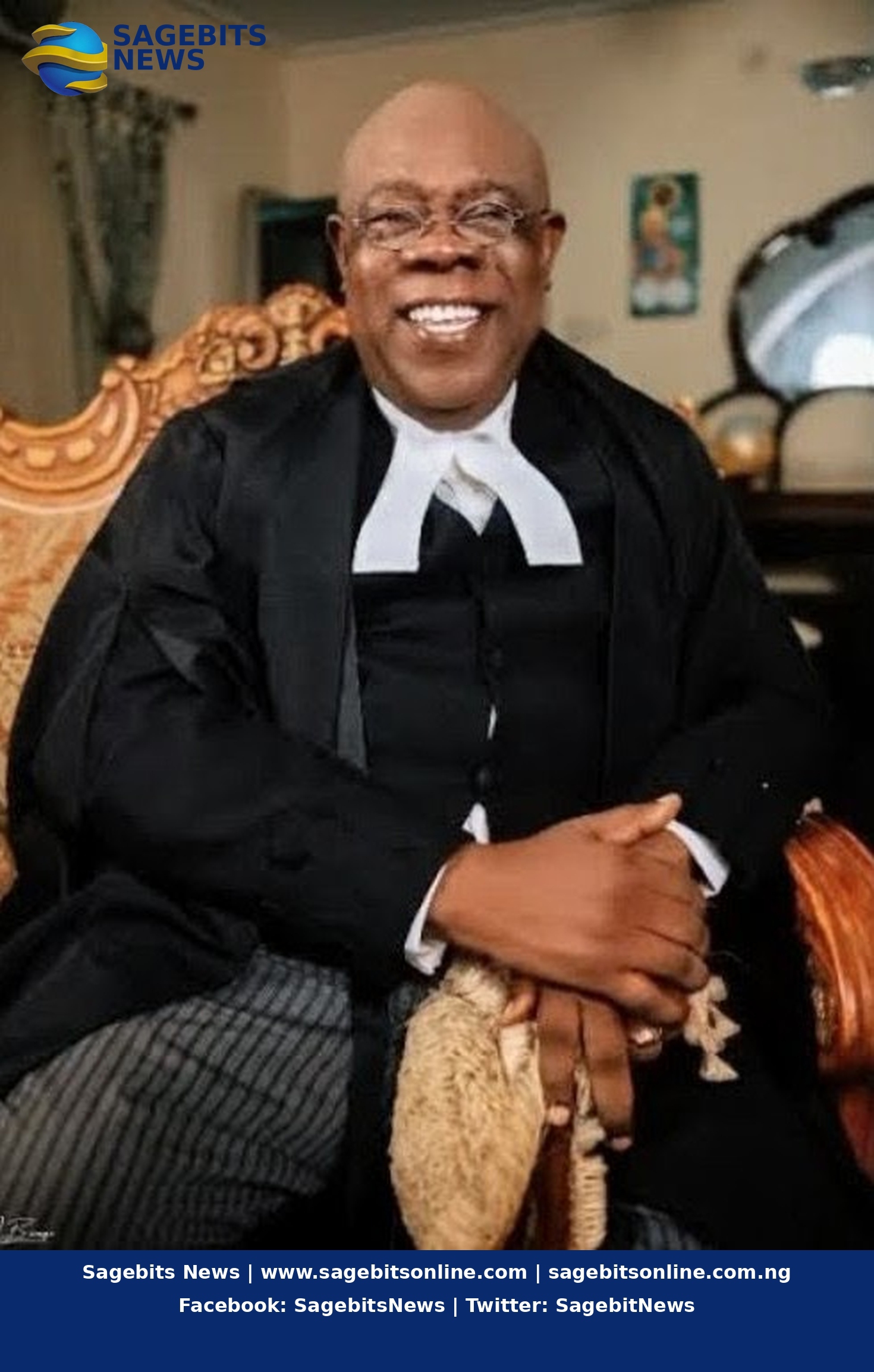
Nigerian churches have been urged to establish constitutionally backed internal dispute resolution mechanisms to address conflicts over leadership succession, church property and doctrinal matters, rather than routinely dragging fellow believers before secular courts.
A Senior Advocate of Nigeria, Asiwaju Kunle Kalejaye, SAN, made the call in an article examining the biblical and legal implications of Christians taking one another to court, citing 1 Corinthians 6:1–7 as a scriptural foundation for internal justice within the Church.
Kalejaye argued that it was contradictory for Christians who profess allegiance to biblical authority to submit ecclesiastical disputes to secular judges when the Church ought to possess the spiritual and institutional capacity to resolve such disagreements.
He maintained that Apostle Paul’s admonition to the Corinthian church against taking disputes among believers before unbelieving judges remained relevant to the Nigerian Christian community, particularly amid recurring litigation over church leadership, trusteeship and property.
According to him, Paul’s message was not merely an appeal for peaceful coexistence but a challenge to Christians to develop the capacity to resolve internal disagreements through wisdom, prayer, Scripture and the guidance of the Holy Spirit.
He noted, however, that the frequent resort to regular courts in Nigeria was partly a consequence of the absence of effective internal dispute resolution structures in many churches.
While several denominations preach reconciliation, he argued that many lack properly constituted ecclesiastical tribunals capable of delivering fair, impartial and binding decisions.
He explained that disputes involving registered trustees, pastoral succession and church administration often end up in court because internal committees are either weak, informal or unable to provide credible remedies.
Kalejaye, however, observed that Nigerian law recognises the autonomy of voluntary religious associations and provides legal frameworks through which churches can regulate their internal affairs.
He cited Part F, Sections 823–850 of the Companies and Allied Matters Act (CAMA) 2020, which provides for the registration and regulation of incorporated trustees, noting that religious organisations operate according to their registered constitutions.
He also referenced judicial decisions, including *Mbanefo v. Molokwu & Ors (2014)*, in which the Supreme Court addressed the relationship between voluntary associations, their constitutions and judicial intervention in their internal affairs.
He further cited *Eguamwense v. Amaghizemwen (1993)*, stressing the importance of exhausting available internal remedies before approaching regular courts, as well as *Fadairo v. NASU (2024)* in discussing the principle of avoiding unnecessary litigation.
According to him, the exhaustion of internal remedies does not remove a person’s constitutional right of access to the courts but regulates when that right may appropriately be exercised.
To address the recurring conflicts, Kalejaye proposed a three-pronged institutional framework for Nigerian churches.
First, he urged denominations to incorporate mandatory arbitration and mediation provisions into their constitutions and relevant trust documents registered with the Corporate Affairs Commission.
He argued that the Arbitration and Mediation Act 2023 provides a legal framework for enforcing written arbitration agreements, referring to Section 2 on arbitration agreements, Section 5 on court referrals to arbitration and provisions governing the enforcement of mediated settlements.
Second, he called for the establishment of permanent ecclesiastical tribunals comprising respected senior clerics and experienced Christian legal practitioners.
He explained that such bodies would combine biblical understanding with legal competence, ensuring that disputes are handled with fairness, transparency and procedural discipline.
For smaller churches and assemblies without the resources to maintain independent tribunals, he suggested regional arbitration centres under umbrella organisations such as the Christian Association of Nigeria (CAN) and the Pentecostal Fellowship of Nigeria (PFN).
Third, he emphasised the need for church tribunals to uphold the principles of natural justice, particularly the right to fair hearing and impartial adjudication.
He cited the principles of *audi alteram partem*, which requires that all parties be given an opportunity to be heard, and *nemo judex in causa sua*, which prohibits anyone from judging a matter in which they have a personal interest.
Kalejaye warned that church decisions reached without observing these principles could be challenged and potentially overturned by secular courts.
He referenced the case of *Rev. Prof. Paul Emeka v. Rev. Dr. Chidi Okorafor & Ors (2017)* as an example of the legal complications that can arise from internal church disciplinary and leadership disputes.
He also referred to Section 57 of the Arbitration and Mediation Act 2023 in advocating the enforcement of arbitral awards, arguing that properly conducted arbitration would provide churches with a legally recognised alternative to prolonged litigation.
On the broader question of religious autonomy, the Senior Advocate cited the 2026 Court of Appeal decision in *Corporate Affairs Commission v. Emmanuel Ekpenyong*, which he said reinforced constitutional protection for religious organisations against undue interference in their internal governance.
He explained that the judgment upheld the nullification of provisions of CAMA 2020, including Sections 839 and 842–848, which had empowered the Corporate Affairs Commission to intervene in the administration of incorporated trustees, including through suspension of trustees and appointment of interim managers.
According to him, the decision underscored the constitutional protections guaranteed under Sections 38 and 40 of the 1999 Constitution, relating to freedom of thought, conscience and religion, as well as peaceful assembly and association.
Kalejaye stressed that while criminal matters remain the responsibility of relevant state authorities, churches should develop effective mechanisms for resolving civil and ecclesiastical disagreements within their own institutions, subject to applicable laws and constitutional safeguards.
He concluded that ending the recurring spectacle of Christians litigating against one another requires more than appeals for prayers and reconciliation.
Rather, he said, church leaders must embrace institutional reforms, sound constitutional drafting, impartial internal tribunals and legally enforceable dispute resolution procedures.
He maintained that such reforms would protect church property and institutional integrity, strengthen public confidence in religious organisations and establish a lasting legacy of accountability, justice and responsible Christian leadership.








Leave a comment