


Nigeria’s drive to build a more resilient and sustainable healthcare system received fresh momentum following a high-level engagement involving key government officials and global health partners focused on strengthening healthcare financing and improving health outcomes nationwide.
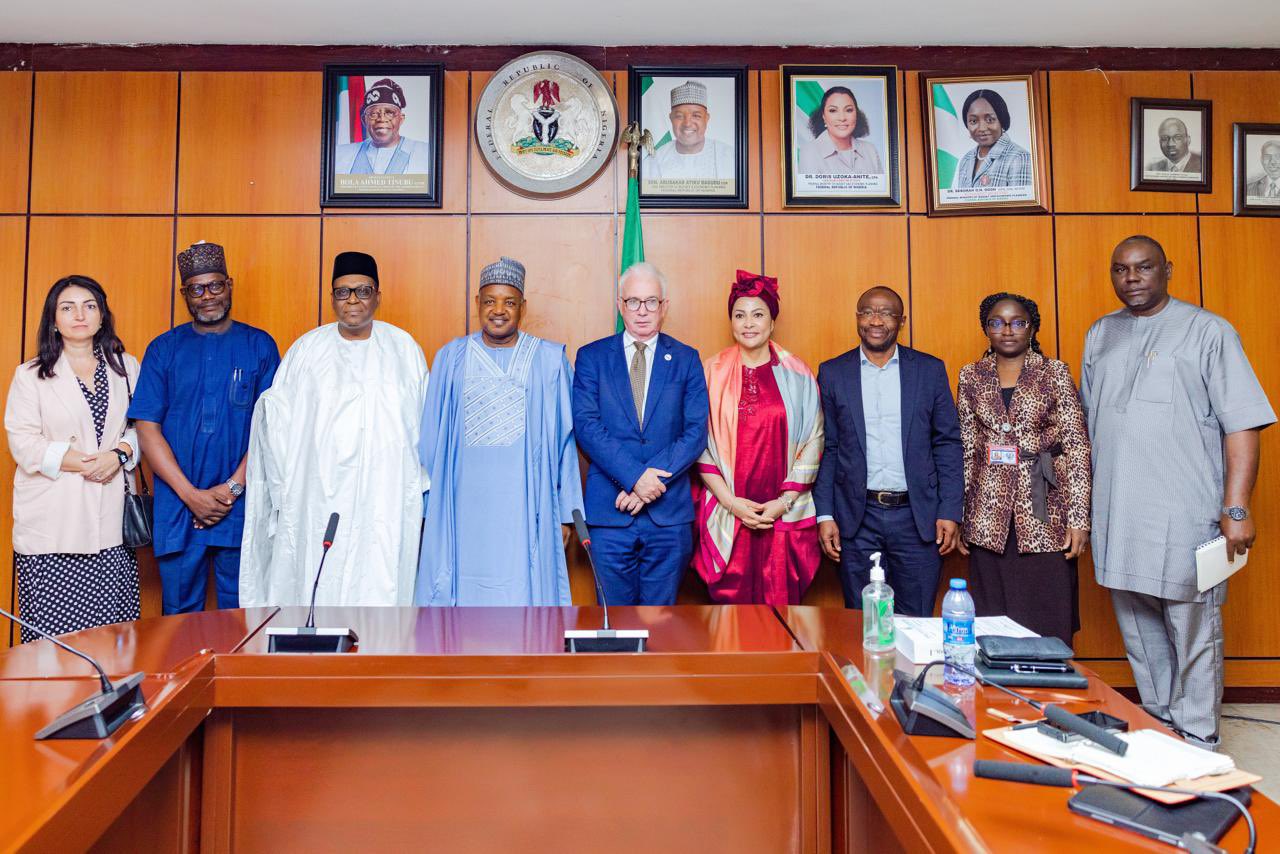
The meeting, hosted by the Minister of State for Finance and National Planning, Dr. Doris Uzoka-Anite, brought together the Coordinating Minister of Health and Social Welfare, Prof. Muhammad Ali Pate, and the Chief Executive Officer of the Global Fund, Peter Sands, for strategic discussions on the future of healthcare financing in Nigeria.
According to Dr. Uzoka-Anite, the engagement centered on the critical relationship between fiscal planning and healthcare delivery, with participants exploring ways to align government budgeting processes with impactful health interventions capable of delivering measurable benefits to millions of Nigerians.
The discussions come at a time when Nigeria is pursuing wide-ranging reforms aimed at improving access to healthcare, expanding health insurance coverage, strengthening primary healthcare services and addressing long-standing funding gaps within the sector.
Aligning Budgets with Health Priorities
A major focus of the meeting was the need to ensure that national budgetary allocations effectively support healthcare priorities and deliver value for money.
Officials emphasized that sustainable improvements in healthcare outcomes require stronger coordination between economic planning institutions and health sector stakeholders to ensure that available resources are strategically allocated to areas of greatest need.
Experts note that while Nigeria has made progress in expanding healthcare access, funding constraints continue to affect service delivery, infrastructure development, workforce capacity and the availability of essential medicines and medical equipment.
The meeting therefore explored practical approaches for improving efficiency, accountability and impact in health spending.

The presence of Global Fund Chief Executive Peter Sands underscored the importance of international partnerships in supporting Nigeria’s healthcare ambitions.
The Global Fund remains one of Nigeria’s largest development partners in the fight against HIV/AIDS, tuberculosis and malaria, while also supporting broader efforts to strengthen health systems and improve disease surveillance capabilities.
Observers say continued collaboration between Nigeria and global health institutions will be vital as the country seeks to reduce dependence on external aid over the long term while building stronger domestic financing mechanisms.
Officials at the meeting stressed that development assistance remains important but must increasingly be complemented by sustainable local funding models capable of supporting long-term healthcare investments.
A key outcome of the discussions was the shared recognition that healthcare financing must move beyond short-term interventions toward more sustainable funding structures.
Participants examined opportunities for unlocking additional resources, leveraging innovative financing mechanisms and improving resource utilization across the healthcare sector.
According to officials, sustainable healthcare financing is not only necessary for expanding access to quality care but is also essential for strengthening national productivity, economic growth and human capital development.
Health economists have consistently argued that investments in healthcare generate significant social and economic returns by reducing disease burdens, improving workforce productivity and enhancing overall national development.
The meeting forms part of broader efforts by the Federal Government to transform Nigeria’s healthcare sector through strategic reforms, increased investment and stronger partnerships with development institutions and the private sector.
Under the leadership of Prof. Muhammad Ali Pate, the Federal Ministry of Health and Social Welfare has prioritized health sector reforms aimed at improving service delivery, enhancing healthcare infrastructure and ensuring universal access to essential healthcare services.
For government officials, the challenge is not simply increasing healthcare spending but ensuring that available resources are deployed efficiently and strategically to achieve maximum impact.
Dr. Uzoka-Anite described the engagement as a productive step toward building stronger collaboration between fiscal authorities, health policymakers and international development partners.
As Nigeria continues to confront complex public health challenges while managing economic realities, policymakers believe stronger coordination between budgeting and healthcare planning will be critical to achieving lasting progress.
The discussions highlighted a shared commitment to building a healthcare system that is adequately funded, resilient and capable of meeting the needs of a growing population.
With healthcare financing increasingly viewed as a cornerstone of national development, officials expressed optimism that deeper partnerships, smarter investments and stronger fiscal alignment will help secure a healthier future for all Nigerians.







Leave a comment