


The Ogun State Government has unveiled a sweeping package of criminal justice reforms aimed at tackling cultism, ritual killings, organised crime and the growing cases of missing persons, while also strengthening the rights and protection of crime victims.
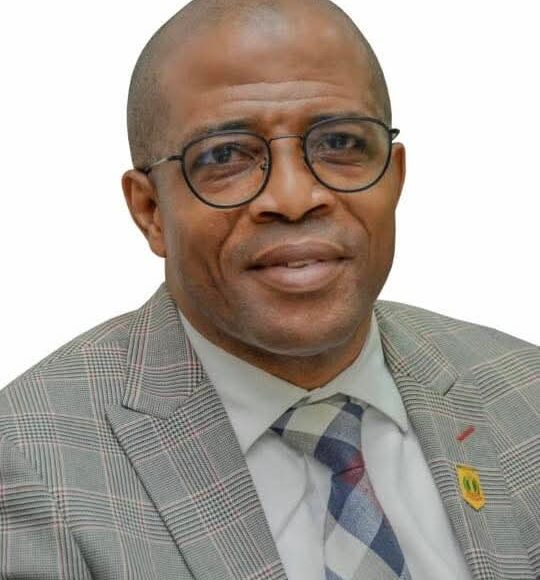
Attorney-General and Commissioner for Justice, Oluwasina Ogungbade (SAN), disclosed the details during an interview on Frontline, a current affairs programme on Eagle 102.5 FM, Ilese-Ijebu, explaining that the Ogun State Executive Council had approved four landmark bills for transmission to the Ogun State House of Assembly.

According to him, the proposed legislation is designed to modernise the state’s criminal justice system by closing legal loopholes, strengthening investigations, improving victim protection and introducing tougher sanctions against organised criminal activities.
At the heart of the reforms is the Group Liability for Offences of Violence, Extortion and Secret Societies (GLOVES) Bill, which seeks to hold every member of an unlawful society criminally responsible for offences committed in furtherance of the group’s objectives.
Ogungbade said the bill was drafted to address the recurring challenge of suspected cult members denying responsibility for killings carried out by fellow members despite admitting membership of the same organisation.
He explained that under the proposed law, anyone who voluntarily joins an unlawful society and subscribes to its objectives would no longer escape liability simply by claiming not to have participated directly in violent acts.
According to him, the bill would mark a decisive departure from existing legal frameworks that have made prosecution of organised criminal groups particularly difficult.

The Attorney-General noted that cultism has expanded far beyond tertiary institutions, with artisans, commercial workers and other members of the public increasingly becoming active participants in violent cult activities across Ogun State.
He described the trend as a serious security concern requiring stronger legal intervention.
The proposed legislation also introduces fresh evidential provisions that would allow prosecutors to rely on the possession or distribution of cult paraphernalia, as well as the dissemination of propaganda for unlawful societies, as evidence of membership.
Ogungbade said the state drew lessons from international organised crime legislation, including anti-Mafia laws, while ensuring that constitutional safeguards remain firmly embedded in the proposed framework.
He added that stakeholders would be invited to make inputs during legislative consideration of the bill before its eventual passage.
Another major proposal is the Victims’ Rights Bill, which seeks to place victims of crime at the centre of the criminal justice process.
The Attorney-General disclosed that the bill would establish a dedicated Victims Support Office within the Ministry of Justice to provide counselling, rehabilitation, legal guidance and other support services for victims of crime.
For the first time in Ogun State, victims would enjoy a statutory Charter of Rights guaranteeing compassionate treatment, timely updates on investigations and prosecutions, notification whenever suspects are granted bail or released, protection from intimidation and improved access to compensation.
He further revealed that victims would also have the right to address the court after conviction but before sentencing, allowing judges to hear directly how criminal acts affected their lives before determining appropriate punishment.
Ogungbade said the legislation would particularly strengthen protection for victims of sexual offences and other vulnerable persons while institutionalising collaboration between the Ministry of Justice and other government agencies responsible for victim support.

The Attorney-General also announced that the government intends to abolish the long-standing practice of delaying missing persons reports for 24 or 48 hours.
Under the proposed Missing Persons Bill, residents would be expected to report disappearances immediately, while law enforcement agencies would be empowered to commence investigations without delay.
He explained that research consistently shows that the first 24 hours after a disappearance are critical for successful rescue operations.
The proposed legislation would equally impose penalties on individuals who deliberately fail to report the disappearance of persons whose whereabouts they are reasonably expected to know.
Ogungbade lamented that many investigations have been frustrated because police often face delays in accessing financial, telecommunications and other records required to trace missing persons.
To address this, the bill empowers investigators to obtain urgent court orders for access to relevant records and, in emergency situations, requires service providers to release critical information immediately under the authority of the law.
The proposal also introduces rapid-response protocols for child abduction cases, including immediate alerts to transport unions, motor parks and other relevant agencies to prevent abducted children from being moved outside Ogun State.
According to the Attorney-General, the legislation would establish stronger collaboration among the Ministry of Justice, the Nigeria Police Force and the judiciary to ensure faster investigations and improve rescue operations.
Ogungbade further disclosed that the state is proposing another landmark law specifically targeting ritual killings and human sacrifice.
He noted that while suspects are currently prosecuted mainly for murder or unlawful interference with human remains, the proposed legislation would directly criminalise rituals involving the use of human beings or human body parts.
He argued that such a law would address the root causes of ritual killings rather than relying solely on existing homicide provisions.
Describing the package of reforms as one of the most comprehensive criminal justice initiatives ever proposed in Ogun State, Ogungbade expressed confidence that the bills would significantly strengthen public safety, improve prosecution of organised crime and modernise the administration of justice.
He added that, if passed into law, the reforms could become a model for other states seeking stronger legal frameworks to combat cultism, violent crimes, ritual killings and the growing challenge of missing persons.






Leave a comment