


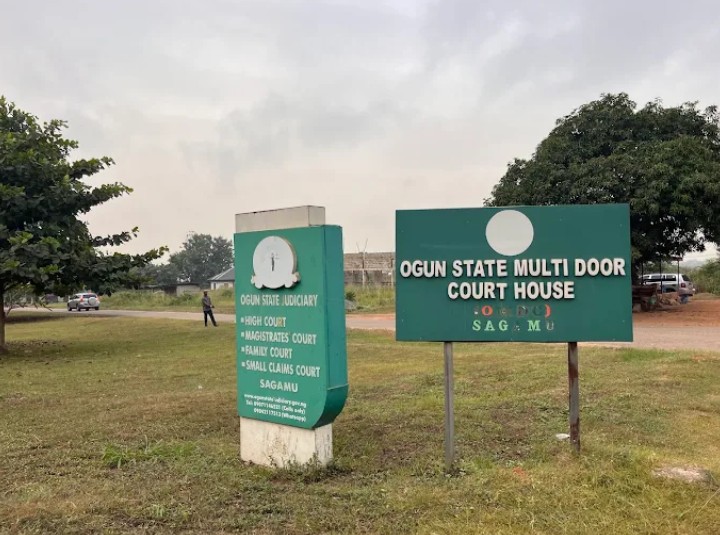
The anticipated resumption of court proceedings in Ogun State following the suspension of the Nigerian Bar Association (NBA)’s three-day boycott suffered an early setback on Thursday as proceedings could not hold at Court 5 of the Sagamu High Court due to the absence of the presiding judge.
The development came barely a day after the NBA announced the end of its July 6–8 boycott and directed lawyers across the affected branches to return to court while discussions with the Ogun State Judiciary continue over disputed court policies.
Lawyers who reported for proceedings at the Sagamu High Court in compliance with the directive were reportedly unable to conduct business after discovering that the judge assigned to Court 5 was unavailable. Court attendants who contacted the judge to ascertain his whereabouts were informed that judges were attending a review meeting in Ijebu-Ode.

The incident has raised concerns about the practical implementation of the much-publicised resumption of court activities, especially as litigants and legal practitioners who returned to court in expectation of normal proceedings were left unable to move their cases forward.
The NBA had suspended the boycott after a three-day protest against several judiciary policies, including the N100,000 fee for virtual court sittings, increased affidavit charges and restrictions on the number of affidavits lawyers can file daily. While the association maintains that the boycott has ended and that lawyers have resumed work, Thursday’s events suggest that normal court operations may not yet have fully returned across all courts.
Adding an interesting dimension to the development, the Chief Judge of Ogun State, Justice Mosunmola Dipeolu, was sighted on the same day at the Nigerian Bar Association Ijebu-Ode Law Week programme, where she participated in activities marking the annual event.
The situation highlights the continuing ripple effects of the recent disagreement between the Bench and the Bar, despite ongoing efforts by both parties to resolve the issues through dialogue and stakeholder engagement.
Although the NBA has reaffirmed its commitment to negotiations and peaceful resolution of the dispute, the inability of at least one court to sit on the first day after the boycott underscores the need for closer coordination and communication between judicial authorities and legal practitioners to ensure a seamless restoration of court services.









Leave a comment