


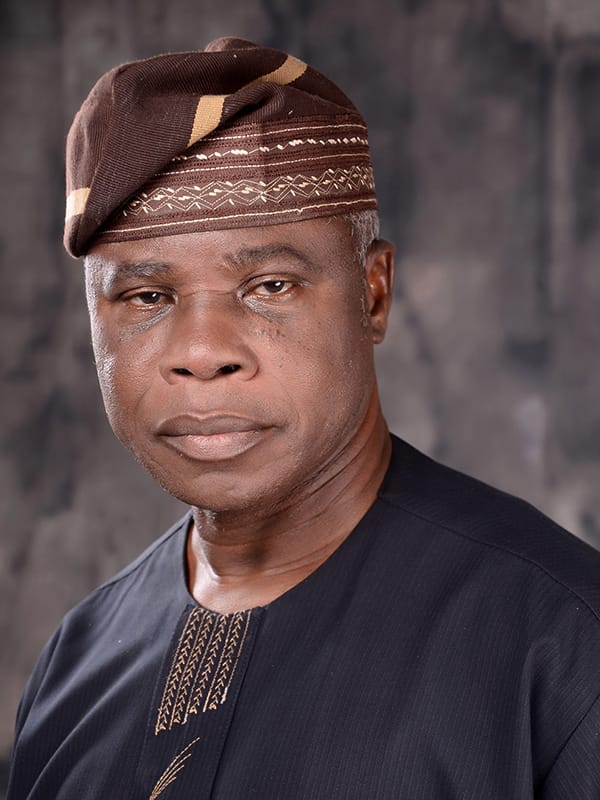
A socio-political group, the Atunto Foundation, has called for a sweeping restructuring of Nigeria’s political and administrative system, warning that the country is trapped in a prolonged crisis that threatens development, equity and effective governance.
The group, which serves as a younger professional arm of Afenifere, is advocating a governance model that decentralises power, strengthens regional autonomy and promotes grassroots development.
Speaking during a public affairs interview, the Secretary General of the foundation and Director of Research at Afenifere, Akin Fapohunda, described Nigeria’s current structure as overly centralised and dysfunctional.
“We are not just saying things are not okay; we have a blueprint for change. The present system is suffocating and not optimal. We need urgent reform,” he said.
Fapohunda explained that the foundation’s proposal centres on restoring a stronger regional system, particularly for the Yoruba region, which he said once thrived under a more decentralised structure.
He referenced the period between 1954 and 1960 as a model of effective governance, citing leaders such as Obafemi Awolowo, Lateef Jakande, Bola Ige and Adekunle Ajasin as examples of visionary leadership.
According to him, governance at the time was driven by service and accountability, unlike the current system, which he argued has become dominated by money politics and excessive executive power.
The Atunto Foundation is proposing a parliamentary-style system at the regional level, where legislative bodies hold supreme authority and leadership emerges collectively.
Under the model, elected representatives would form a regional parliament responsible for governance, with a premier selected from among them, rather than concentrating power in a single executive office.
Fapohunda criticised the current system where state governors wield significant control with limited legislative oversight.
“Governors operate almost independently, while assemblies lack real authority. That imbalance must change,” he said.
The group also proposed that Yoruba-speaking populations in states such as Kogi State and Kwara State should be allowed to determine their regional alignment through referenda.
He emphasised that such decisions should be democratic and participatory rather than imposed.
“Every community should decide its future through voting, not by force,” he stated.
Fapohunda clarified that the foundation is not advocating for Nigeria’s breakup but for a rebalancing of power within the federation.
Drawing comparisons with countries like the United Kingdom, he noted that regional autonomy can coexist within a unified nation.
“We are asking for concessions that allow us to remain within Nigeria while managing our affairs more effectively,” he said.
The foundation also criticised the effectiveness of federal agencies and development commissions, describing many as bureaucratic and disconnected from grassroots realities.

Fapohunda argued that such institutions often fail to deliver meaningful development, despite significant funding.
“Centralised structures have not delivered the expected results. Development must be driven locally for it to be effective,” he said.
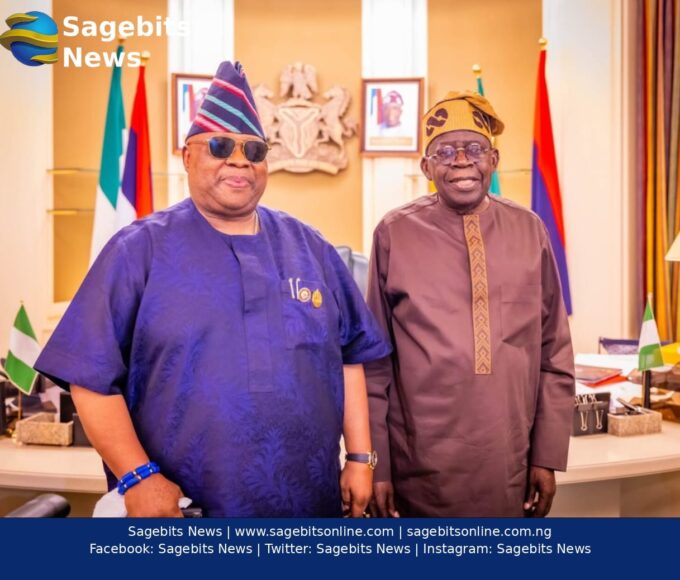
The group urged Bola Ahmed Tinubu to take decisive steps toward restructuring, stressing that reforms should not be delayed.
“Why wait? This is the time for bold leadership that can redefine Nigeria’s future,” Fapohunda said.
He added that decentralisation would enable faster response to local challenges and improve governance outcomes across regions.
Cultural Identity and Local Governance
Fapohunda also highlighted the importance of preserving cultural identity, noting that the Yoruba people consist of multiple sub-groups with distinct traditions.
He explained that under the proposed system, these sub-groups would function as autonomous municipalities within a broader regional framework, allowing governance to reflect local realities.
The Atunto Foundation concluded by urging broader national engagement on restructuring, emphasising dialogue, inclusiveness and citizen participation.
“We are not calling for separation. We are calling for understanding and meaningful conversation about the future of this country,” Fapohunda said.
The group believes that adopting a decentralised system could strengthen accountability, promote development and restore confidence in governance across Nigeria.









Leave a comment