


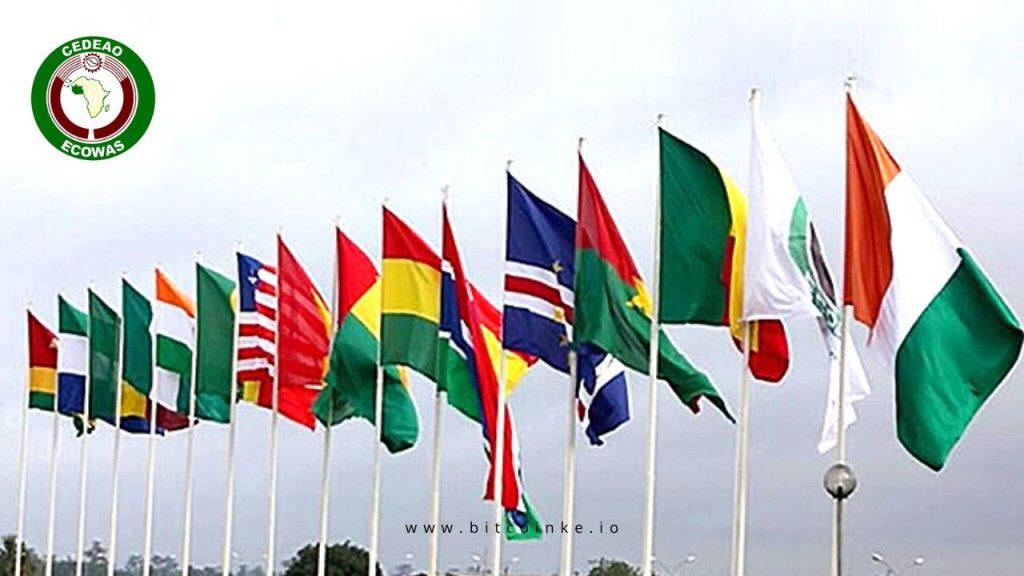
The Economic Community of West African States (ECOWAS) has reaffirmed its commitment to democratic governance and regional stability, while charting a bold agenda for economic integration across the sub-region.
The announcement came after the 68th Ordinary Session of the ECOWAS Authority of Heads of State and Government held at the State House, Abuja. The summit condemned the recent coup in Guinea-Bissau and the attempted coup in Benin, reiterating plans to impose sanctions on unconstitutional changes of government.
President Bola Ahmed Tinubu, represented by Vice President Kashim Shettima, urged member states to adopt a united front against coups and other security threats. He highlighted the need for collective action, noting that West Africa’s porous borders require coordinated security efforts. “No single member state, regardless of size, can achieve enduring stability alone. Our security, prosperity and resilience are collective responsibilities,” he said.

Chairing the summit, President Julius Maada Bio of Sierra Leone emphasised that there is no alternative to democratic governance and called for a renewed focus on economic integration after decades dominated by security challenges. He announced plans to operationalise the ECOWAS Standby Force, including a 1,650-person counter-terrorism brigade by 2026, supported by sustainable funding mechanisms.
President Bio also unveiled measures to deepen economic integration, including the removal of trade barriers, harmonisation of policies, expansion of the ECOWAS Trade Liberalisation Scheme, and advancement of monetary convergence aligned with the African Continental Free Trade Area (AfCFTA). A single regional currency by 2027 was identified as a strategic priority.
In a move aimed at boosting trade, tourism and mobility, President Bio announced that effective January 1, 2026, ECOWAS would abolish air transport taxes and reduce passenger and security charges by 25 per cent, describing the initiative as “practical, people-centred and responsive to everyday realities.”
The summit also marked the launch of the ECOWAS Business Council, with Nigeria’s eminent industrialist Aliko Dangote appointed as the pioneer chairman. The council is designed to drive private-sector-led investment and deepen economic cooperation across the region, with plans for a Davos-style West African Economic Investment Summit to coordinate regional investments.

Other key resolutions included commending recent elections in Guinea-Bissau and Côte d’Ivoire, welcoming preparations for elections in Benin, and acknowledging Sierra Leone’s Agreement for National Unity between the government and the opposition. ECOWAS also expressed concern over former Gambian President Yahya Jammeh’s statements from exile, warning they threaten peace and social cohesion.
The summit was attended by regional leaders including Presidents José Maria Neves (Cabo Verde), Bassirou Diomaye Faye (Senegal), Faure Gnassingbé (Togo), Alassane Ouattara (Côte d’Ivoire), Adama Barrow (The Gambia), and John Mahama (Ghana), while other member states were represented by senior officials.







Leave a comment