


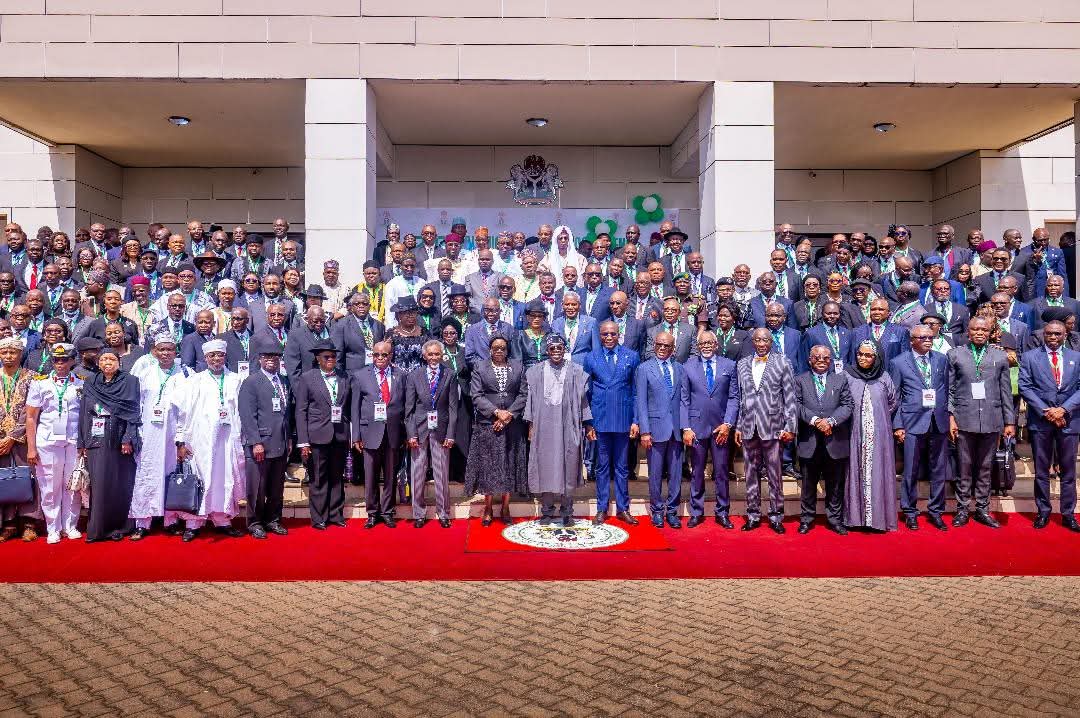
In the cool Abuja morning of November 17, 2025, the National Judicial Institute hummed with an uncommon solemnity. At the Andrews Otutu Obaseki Auditorium, the annual gathering of Nigeria’s Superior Court judges—usually a dignified but predictable ritual—felt charged with urgency. President Bola Ahmed Tinubu, appearing before the nation’s top judicial minds, was not merely paying a ceremonial visit. He had come with a message: justice in Nigeria must reclaim its moral authority.
Addressing the 2025 All Nigerian Judges’ Conference, the President framed the Judiciary as the silent engine that has, time and again, kept Nigeria from political derailment. In moments when the country teetered between constitutional order and authoritarian impulses, Tinubu reminded his audience, it was judges who steadied the ship. “History has recorded,” he said, “that the Judiciary stood firm as the stabilising force of our national life.”
But this year’s theme—“Building a Confident Judiciary”—wasn’t chosen for nostalgia. It was a mirror held up to the present.

A Judiciary Under Scrutiny
Tinubu did not shy away from the truth many Nigerians murmur in frustration: judicial delays, questionable rulings, and integrity concerns have weakened public trust. And without trust, he said, even the soundest judgment loses its moral weight.
“The confidence of the people is the true currency of justice,” he declared, making clear that legitimacy does not lie only in statutes, but in perception.
Tinubu’s tone balanced reassurance with realism. While reaffirming his administration’s commitment to judicial independence, he reminded the audience that the Judiciary does not operate in isolation. Democracy, he said, thrives only when all three arms of government work in synergy—“united by purpose, even when separated by function.”
Reform Must Be More Than Rhetoric
A significant portion of the President’s remarks focused on the practical: modern courtrooms, better welfare, digital case management systems, and more efficient procedures. He pledged “tangible, not ceremonial” support to transform Nigeria’s courts into institutions worthy of the democratic aspirations they safeguard.
Technology, Tinubu insisted, is no longer optional. From e-filing to integrated case management, the Judiciary must evolve or risk losing relevance in a world where digital transparency is often synonymous with credibility.
Yet even as he promised infrastructure and modernization, Tinubu pivoted to the heart of the matter: the character of those who wear the robe.
“Justice Must Never Be for Sale”
The President’s most emphatic line—a sharp, unambiguous warning—cut through the hall with the weight of a national rebuke:
“Justice must never be for sale, and the Bench must never become a sanctuary for compromise.”
He cautioned that corruption in the Judiciary is not just another national burden; it is a threat to the Republic’s very soul. A corrupt executive can mismanage power. A corrupt legislature can pass self-serving laws. But a corrupt Judiciary? That, he said, “destroys the nation at its core.”
Tinubu urged the Judiciary to look inward, insisting that discipline must be transparent, firm, and uncompromising. The National Judicial Council, while important, cannot shoulder the burden alone. “Only a Judiciary that cleanses itself,” the President said, “can command the moral authority to cleanse society.”

A Call to Courage
As the conference prepared to move into closed-door sessions, Tinubu left the judges with a challenge that blended aspiration with admonition:
reduce the backlog of cases, strengthen internal discipline, make justice accessible to society’s most vulnerable—and dare to become the true last hope of the common man.
He described the judges before him not merely as interpreters of the law, but as “guardians of Nigeria’s moral conscience.” With each ruling, he argued, they shape the nation’s democratic destiny, ensuring no citizen is too small to be heard and no government too powerful to be checked.
A Moment That Could Define an Era
For a President whose own electoral journey has wound through the intricate corridors of the Nigerian judicial system, Tinubu’s message carried symbolic resonance. His closing remarks blended patriotic appeal with a sense of historical responsibility:
“Each fair judgment strengthens the Republic; each courageous ruling preserves its soul.”
With that, he declared the 2025 Judges’ Conference open—leaving the nation to wonder whether this moment will mark the beginning of a new judicial awakening, or simply become another ceremonial footnote in Nigeria’s long struggle for justice.











Leave a comment