



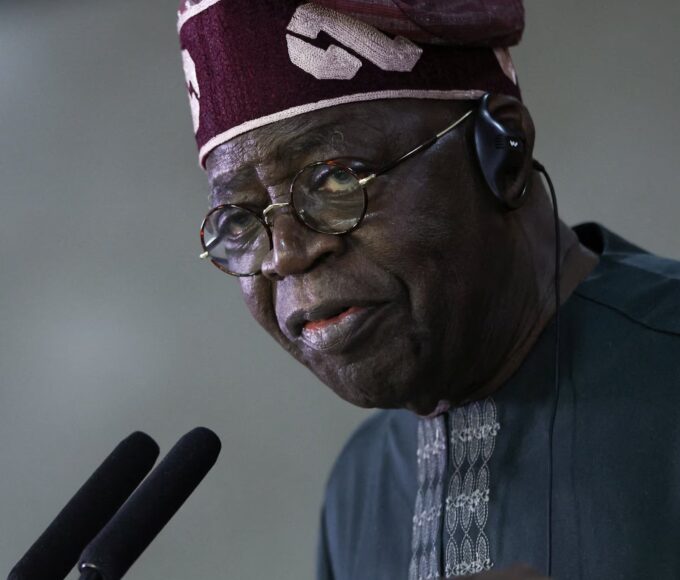
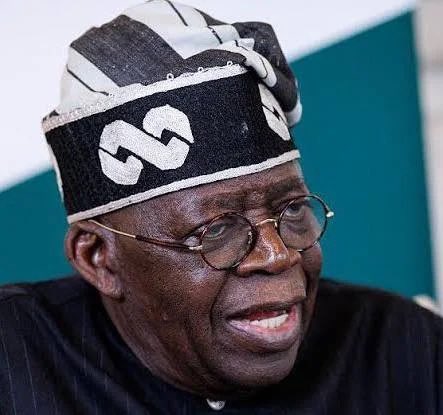
President Bola Ahmed Tinubu has assured Nigerian petroleum workers that the country’s government-owned refineries will not be abandoned, saying the Federal Government is undertaking a comprehensive structural, technical and managerial reset to reposition the facilities for sustainable and profitable operations.
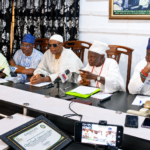
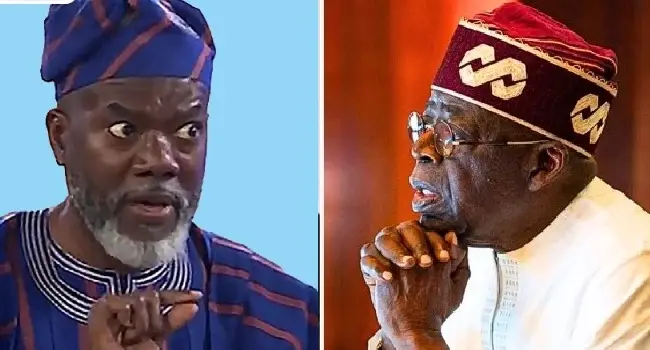
President Tinubu gave the assurance on Thursday, August 13, 2026, in Abuja when he received the National Executive Council of the Nigeria Union of Petroleum and Natural Gas Workers (NUPENG), led by its National President, Comrade Salimon Akanni Oladiti, at the State House.
The President said the substantial investments already made in the refineries over the years made their revival imperative, but stressed that merely restarting the plants would not be enough.
According to him, the objective of the proposed reset is to ensure that the facilities operate efficiently, generate value and ultimately become economically viable.
“The refineries that you mentioned are going to come back to work; we’re just building a very firm, resetting, and structural reworking of the economy of it.”
Tinubu cautioned that the mere sight of a refinery producing flames and smoke should not automatically be interpreted as evidence of successful operations.
He said the real measure of success must be whether the facilities are capable of producing efficiently, generating value and operating profitably.
The President said his administration would approach the refinery challenge through detailed research, technical assessment, restructuring and improved leadership rather than short-term interventions.
He also accepted responsibility for addressing the condition of the nation’s inherited assets, saying the responsibility to make them productive ultimately rests with his administration.
“No matter what has happened in the years past, it’s now my responsibility as president to fix it and make it work for the greatest common good of our population.”
The renewed commitment to refinery rehabilitation comes amid Nigeria’s continuing efforts to strengthen domestic refining capacity and reduce reliance on imported petroleum products. Recent policy discussions in the petroleum sector have also focused on improving crude supply and pricing arrangements for domestic refiners.

The President also appealed to Nigerians and organised labour to support the government’s reform programme, saying the administration’s objective is to build an economy that creates greater opportunities for citizens.
He described democracy as a system that must protect freedom and opportunity, while acknowledging the difficulties that can accompany major economic changes.
Tinubu assured the NUPENG delegation that Nigerians would ultimately benefit from the reforms.
“I promise you, you will enjoy a better Nigeria.”
The meeting also touched on the implementation of local government autonomy.
Responding to concerns raised by the union, President Tinubu said constitutional issues surrounding the implementation of local government autonomy were being reviewed, with the possibility of fine-tuning the relevant arrangements.

He appealed to stakeholders to exercise patience and understanding as the process progresses.
The President also used the occasion to remember the late former NUPENG President, Frank Kokori, whom he credited with playing an important role in Nigeria’s struggle for democracy.
Tinubu recalled his personal relationship with Kokori and the difficult struggles that preceded the restoration of democratic rule in Nigeria.
“We struggled for this democratic dispensation together, and it was very tough for us to have this democracy.”
The President described NUPENG as an important partner in national development and acknowledged the union’s role in the country’s democratic journey.
In his remarks, NUPENG President, Comrade Salimon Akanni Oladiti, commended Tinubu for what he described as the bold decision to remove the petroleum subsidy.
Oladiti said the policy had helped free resources that could be redirected towards infrastructure and other sectors of the economy.
He particularly praised the Federal Government’s ongoing investment in road infrastructure, citing the 750-kilometre Lagos-Calabar Coastal Highway and the 1,068-kilometre Sokoto-Badagry Superhighway among major projects.
According to the NUPENG president, the rehabilitation and construction of federal highways have direct implications for petroleum workers, particularly tanker drivers who spend long periods transporting petroleum products across the country.
“For our members, a good road is the difference between arriving home safely and never arriving at all.”
He said improved roads would help reduce accidents, petroleum spillages, loss of lives and the difficulties encountered by drivers and other road users.
Oladiti, however, appealed to the President to sustain efforts towards the revival of Nigeria’s refineries, stressing that functional refineries would strengthen energy security, reduce dependence on imported petroleum products and create additional employment opportunities.
The President also promised greater inclusion of NUPENG in the implementation of the Federal Government’s Presidential Initiative on Compressed Natural Gas (CNG).
He challenged the union’s leadership to ensure that the benefits of the CNG programme reach ordinary commuters and transport users rather than remaining concentrated among operators and businesses.
The administration’s CNG programme is part of its broader effort to expand the use of cheaper and more readily available domestic gas as an alternative fuel for transportation.
The Minister of Information and National Orientation, Mohammed Idris, commended NUPENG for publicly acknowledging what he described as positive developments arising from the Tinubu administration’s reform programme.
Idris said it was unusual for organised labour to return to the President to express appreciation for government policies, describing NUPENG’s position as evidence of a changing relationship between government and trade unions.
He recalled previous engagements between President Tinubu and organised labour, including the approval of wage-related measures and the subsequent review of the national minimum wage.
The minister said NUPENG’s recognition of reforms such as fuel subsidy removal and infrastructure development was significant because of the union’s strategic position within the oil and gas sector.
The President’s position on the refineries places emphasis not simply on restarting the plants but on ensuring that they operate as viable economic assets.
Nigeria has historically invested substantial public resources in rehabilitating its government-owned refineries, with Port Harcourt, Warri and Kaduna among the facilities whose restoration has repeatedly been announced over the years.
The latest commitment therefore places the emphasis on a different measure of success: sustainable production, technical efficiency, sound management and profitability.
Tinubu’s insistence that refinery operations must produce value suggests that the administration intends to assess the facilities not merely by whether they can be restarted, but by whether they can remain operational and economically productive.

At the conclusion of the engagement, NUPENG leaders decorated President Tinubu as the Grand Patron of the union, further underscoring the relationship between the Presidency and the organised petroleum workers.
The meeting brought together discussions on refinery revival, economic reforms, infrastructure, CNG implementation, local government autonomy and Nigeria’s democratic development.
For the Federal Government, the refinery pledge represents a renewed commitment to restoring domestic refining capacity. For NUPENG, the meeting provided an opportunity to acknowledge some of the administration’s reforms while pressing for sustained action on an issue that remains central to Nigeria’s energy security.



Leave a comment