


Nigeria’s economic and development landscape is recording fresh activity across education, healthcare, technology, employment and the capital market, with new government initiatives and market movements pointing to increased efforts to unlock investment and create wider opportunities.
At the centre of the latest developments is the Nigerian Education Loan Fund, NELFUND, which has sharply increased its financial intervention in nursing and midwifery education, while President Bola Ahmed Tinubu is seeking deeper cooperation with BRICS countries in emerging and strategic sectors.
The Federal Government is also targeting two million jobs from Nigeria’s creative industry by 2030, while investors returned to the Nigerian equities market, pushing market capitalisation higher as trading activity surged.
NELFUND has disclosed that its funding for nursing and midwifery education rose from ₦59.4 million in the 2023/2024 academic session to ₦205.8 million in 2024/2025 and then to ₦811.9 million in 2025/2026, representing an almost 14-fold increase over the three academic sessions.
The intervention has so far supported 5,381 student nurses and midwives across 21 federal and state-owned institutions. Beneficiaries include students in institutions in Oyo, Lagos, Ogun, Katsina, Kebbi, Cross River, Bauchi, Anambra, Kaduna, Taraba, Zamfara and the Federal Capital Territory.
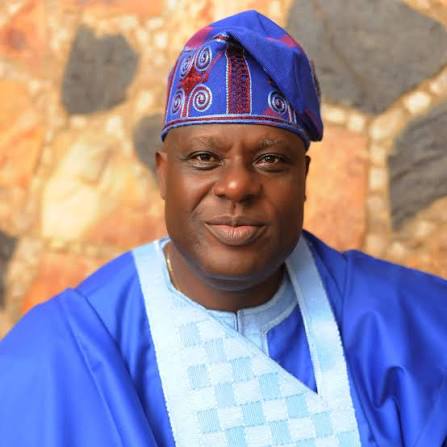
NELFUND Managing Director and Chief Executive Officer, Akintunde Sawyerr, described the intervention as an investment in Nigeria’s human capital and future healthcare workforce, stressing that removing financial barriers could help more young Nigerians complete professional training.
The funding expansion comes at a time when Nigeria continues to face the need for a stronger healthcare workforce, making access to professional training an important component of efforts to improve the country’s health sector.
Meanwhile, Nigeria is seeking to deepen its economic and technological engagement with BRICS as President Tinubu called for stronger cooperation in artificial intelligence, digital infrastructure, fintech, critical minerals and advanced manufacturing.
Speaking at the 18th BRICS Leaders’ Summit in New Delhi, where Vice President Kashim Shettima delivered his address, Tinubu positioned Nigeria as an important gateway to Africa’s expanding market under the African Continental Free Trade Area, while calling for reforms to global governance and international financial systems.
The President’s BRICS pitch places technology, finance and natural resources at the centre of Nigeria’s international economic strategy, with the country seeking to attract investment and build stronger partnerships around sectors capable of driving industrialisation.
The move comes as BRICS itself continues to expand its influence in global economic affairs, with member states placing greater emphasis on artificial intelligence, cross-border payments, trade, critical minerals and technological cooperation.
On employment, the Federal Government has set a target of creating two million jobs in Nigeria’s creative industry by 2030 as part of its broader strategy to turn the country’s cultural and creative resources into sustainable businesses.
Minister of Art, Culture, Tourism and Creative Economy, Hannatu Musawa, disclosed the target at the 2026 Kano Creative Summit, where she highlighted the need to expand creative opportunities beyond Lagos and Abuja.
She identified traditional crafts, leatherwork, weaving, embroidery, performing arts, film and other cultural industries as areas with significant potential for employment and economic growth.
The government’s Destination 2030 initiative is expected to form part of the framework for achieving the two-million-job target, with greater emphasis on ownership, intellectual property, business structures and access to markets for creative practitioners.
Musawa stressed that talent is not Nigeria’s major problem, arguing that creatives need stronger business structures and access to markets that can convert talent into sustainable income.
The Nigerian capital market also opened the new week on a positive note, with the equities market recording a rebound that added about ₦100.5 billion in market value as trading activity surged. Reports put the increase in trading volume at 161.79 per cent, reflecting stronger investor participation and renewed demand for selected stocks.
The market movement comes amid heightened investor attention to major Nigerian companies and broader economic reforms. The launch of the Dangote Petroleum Refinery’s initial public offering on Monday, with 4.1 billion shares being offered at ₦525 each, is also expected to generate significant interest in Nigeria’s capital market.
Taken together, the four developments highlight different parts of Nigeria’s economic transformation agenda: investment in professional education and healthcare manpower, international partnerships in technology and strategic resources, employment through the creative economy and increased activity in the capital market.
For policymakers, the challenge will be to translate these individual gains into sustained improvements in jobs, productivity, investment and living standards, while ensuring that increased funding and market activity produce broad-based economic benefits.







Leave a comment