


The Federal Government has directed Energy China to explore the most practical approach to delivering the long-delayed Mambila Hydropower Project, including the possibility of implementing the project in phases, following Nigeria’s recent victory in an international arbitration dispute linked to the project.
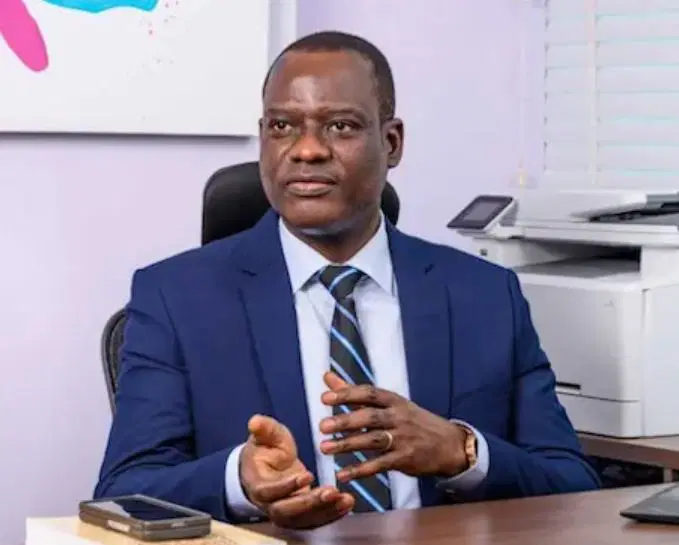
Minister of Power, Joseph Tegbe, disclosed this as he outlined the outcome of Nigeria’s recent power-sector mission to China and the government’s medium- and long-term strategy for expanding electricity generation and transmission capacity.
An International Chamber of Commerce (ICC) arbitration tribunal in Paris ruled in Nigeria’s favour on September 17, rejecting claims by Sunrise Power and Transmission Company Limited connected to disputes over the Mambila project. The related claims had exposed Nigeria to potential liabilities of more than $3.38 billion. President Bola Tinubu described the ruling as removing a major legal obstacle that had delayed the project for years.
The Mambila project, located in Taraba State, has undergone several changes in its proposed capacity and implementation structure since it was conceived. Recent reports put the current planned capacity at about 1,500MW, following earlier proposals for a substantially larger facility.
Tegbe said the government was now focused on identifying a practical and financially viable route for moving the project forward, with large-scale hydropower projects such as Mambila forming part of Nigeria’s broader electricity strategy.
He also said smaller hydropower schemes serving agricultural corridors would be developed alongside major generation projects as part of efforts to connect electricity infrastructure with productive economic activity.
The minister’s comments followed a high-level Nigeria-China power-sector mission during which the Nigerian delegation held discussions with major Chinese engineering companies, financiers and equipment manufacturers.
According to Tegbe, the mission secured commitments from Sinomach, China Machinery Engineering Corporation (CMEC), China National Electric Engineering Corporation (CNEEC) and Chinese financial institutions to accelerate priority power projects.
CMEC, which is already involved in Nigeria’s Presidential Power Initiative (PPI), reaffirmed its commitment to the 1.9-gigawatt portfolio, with the first transmission lines scheduled for delivery in the first quarter of 2027. The discussions also focused on accelerating completion schedules and moving towards broader partnerships involving financing, technology and technical expertise.
CNEEC, meanwhile, has advanced financing arrangements for the $116 million Zungeru power evacuation project, while the government is also pursuing expanded cooperation on transmission infrastructure.
Tegbe disclosed that TBEA had committed to a proposed $500 million industrial park for the manufacture of power equipment in Nigeria. The company is also expected to participate in accelerated PPI work and discussions around the proposed East-West Super Grid, which has a three-year delivery pathway.
HengFei Cables also committed to supplying cables for the second phase of the PPI and proposed establishing a cable assembly plant and training centre in Nigeria.
The minister said the Chinese engagements were not limited to importing infrastructure but were intended to encourage local manufacturing, technology transfer and the development of technical skills within Nigeria.
The Federal Government has increasingly emphasised the need to link new generation and transmission capacity with industrial demand, arguing that reliable electricity infrastructure must support productive sectors and create opportunities for local manufacturing.
The recent China mission also explored opportunities for Chinese investment in sectors including steel, automotive manufacturing, digital infrastructure, data centres, cold-chain logistics and sugar processing.
Tegbe said the government’s objective was to turn international partnerships into bankable projects and completed infrastructure capable of delivering additional megawatts, energised transmission lines and more reliable electricity supply.
The renewed focus on Mambila follows the ICC ruling that rejected Sunrise Power’s claims. The tribunal also directed Sunrise and its promoter to refund Nigeria’s legal fees of $11.8 million, according to reports on the award.
For the Federal Government, the arbitration outcome provides an opportunity to revisit the implementation of the Mambila project while the wider Nigeria-China cooperation is expected to support transmission expansion, power-equipment manufacturing and other components of the electricity value chain.







Leave a comment