


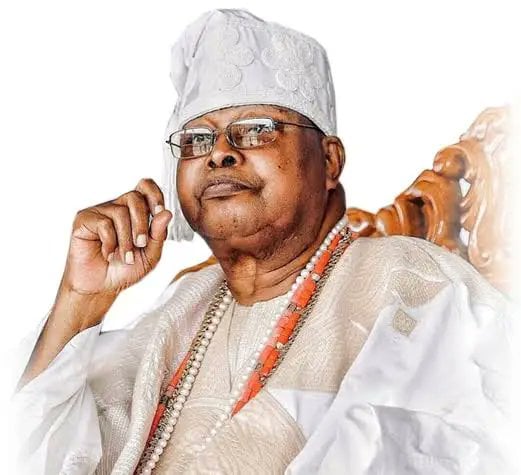
The prolonged dispute over the succession to the vacant Awujale stool of Ijebuland has brought renewed attention to a 1944 archival document which its proponents say could help clarify the genealogy and membership of the Fusengbuwa Ruling House.
The document, identified as File No. IjeProf C17/5/2 and dated March 16, 1944, is preserved at the National Archives in Ibadan. It was certified in June 2026 and has now featured in a defence filed before the High Court of Ogun State, Ijebu-Ode Division, in Suit No. HCJ/149/2026.
According to the court material reported on the document, a genealogical table submitted in 1944 traced Jadiara as the father of Fusengbuwa and listed 12 children of Fusengbuwa: Osinuga, Aderudu, Osinupebi, Adekerun, Ogunade, Isenfadeke, Osifusan, Adesimbo, Okuyadewo, Adebowale, Olufadi and Osiyemi.
The archival material has assumed significance because of disagreements over the composition of the Fusengbuwa Ruling House and the eligibility of some of the names submitted during the recent succession process.
The Fusengbuwa Ruling House reportedly submitted a list of 95 nominees following the death of the late Awujale, Oba Sikiru Kayode Adetona, on July 13, 2025. After nine names were identified as duplicates, the number stood at 86. Court filings have subsequently questioned the classification of several nominees under family groupings which, according to the defendants, do not correspond with the branches identified in the 1944 genealogical record.
The defence also argues that seven of the branches identified in the archival genealogy — Aderudu, Osinupebi, Osiyemi, Isenfadeke, Osifusan, Adebowale and Ogunade — had no candidates on the disputed nomination list. It further challenges the classification of some other groups and questions whether certain names represent ancestral branches or settlements rather than recognised lineages.
The significance attached to the document therefore goes beyond its age. Those relying on it contend that a historical record made decades before the present succession dispute could provide an objective reference for determining the recognised branches of the Fusengbuwa family.
The argument is that candidates should first be assessed against the documented genealogy before other considerations are brought into the selection process. In this view, the archival record could provide a common starting point for the ruling house, kingmakers and other stakeholders seeking to resolve the disagreement.
The current dispute, however, remains subject to legal and traditional processes. A court filing is not itself a judicial determination that the genealogy contained in the 1944 document conclusively settles the eligibility of every claimant. The court will have to consider the competing evidence and arguments before making any applicable determination.
The wider succession process has already faced delays following the vacancy created by the death of Oba Adetona. The Ogun State Government had suspended the process amid concerns surrounding the nomination exercise, while the Fusengbuwa Ruling House subsequently instituted legal proceedings seeking, among other reliefs, recognition of its nomination process and an end to the suspension.
Against this background, the 1944 record offers another piece of historical evidence for consideration. Whether it ultimately provides the basis for resolving the disagreement will depend on how the relevant traditional authorities, government and court assess it alongside the other records and claims before them.
For Ijebuland, the central issue remains how to reconcile historical genealogy, the applicable chieftaincy framework and the competing claims in a manner that allows the process of selecting the next Awujale to proceed without further division.
The article is written by Adegboyega Makanjuola, an indigene of Ijebu-Ode, Ogun State, Nigeria, based in the United Kingdom.








Leave a comment