


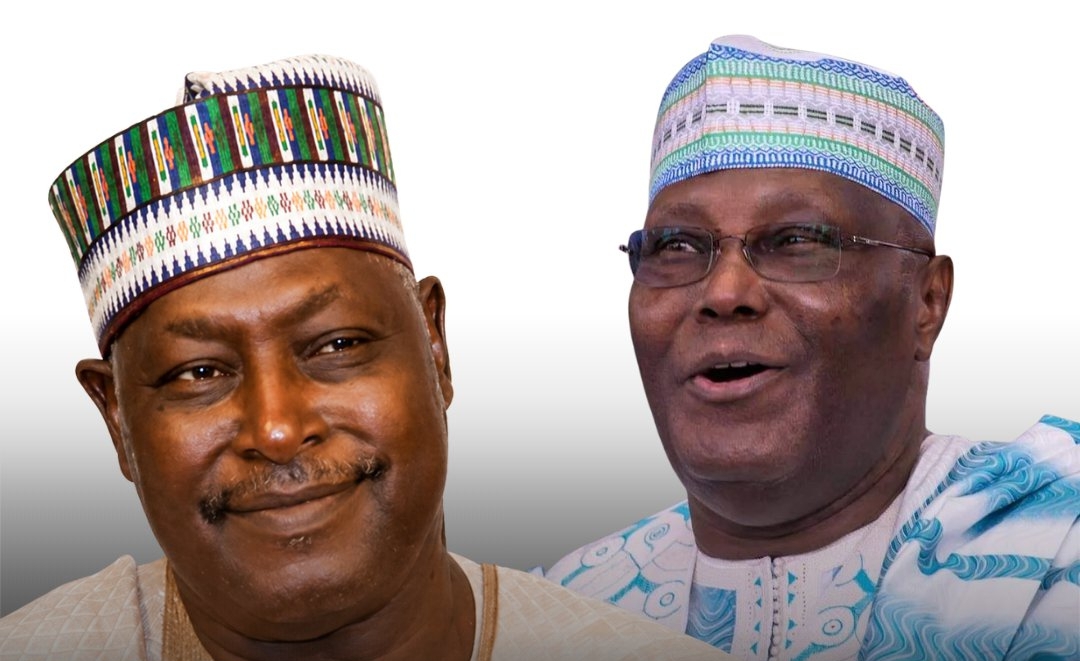
Former Secretary to the Government of the Federation (SGF), Babachir David Lawal, has criticised former Vice President Atiku Abubakar, alleging that he is disconnected from the realities of ordinary Nigerians and lacks the level of empathy required for national leadership.
Lawal made the remarks during an interview on Frontline, a current affairs programme on Eagle 102.5 FM, Ilese-Ijebu, Ogun State, where he spoke extensively on opposition politics, coalition movements, internal party democracy, and the leadership options available ahead of the 2027 general elections.
The former SGF, who recently resigned from the African Democratic Congress (ADC) following disputes over the party’s presidential primary process, said leadership must be evaluated beyond political ambition and campaign promises. According to him, citizens should closely examine the conduct, public engagement, and responsiveness of those seeking the nation’s highest office.

Lawal argued that leaders aspiring to govern Nigeria must demonstrate empathy and solidarity with communities affected by insecurity, economic hardship, and social challenges.
According to him, political leadership requires more than public statements, stressing that visibility and engagement during moments of national crisis remain critical indicators of a leader’s commitment to the people.
He questioned what he described as Atiku Abubakar’s level of engagement with communities affected by insurgency, kidnapping, and violent attacks across the country.
“Have you ever seen Atiku pay condolence to communities ravaged by insurgency? Have you heard him consistently condemn killings or show solidarity with victims of insecurity? Leadership requires empathy and visible engagement with the people,” Lawal said.
The former SGF maintained that Nigerians, particularly those in rural communities, continue to bear the burden of insecurity and economic hardship and deserve leaders who are actively connected to their struggles.
Speaking on opposition coalition politics, Lawal expressed concern that many political alliances in Nigeria are driven more by personal ambition than by national interest or ideological conviction.
According to him, coalition movements often begin with lofty objectives but become unstable once leadership positions and candidacies become contested.
“I have observed that many politicians join coalitions with the expectation of becoming the sole beneficiary of the arrangement. Once it becomes clear that they may not emerge as the preferred candidate, they begin to look elsewhere,” he stated.
Lawal said this recurring pattern has weakened opposition politics and prevented the emergence of strong and sustainable alternatives capable of challenging the status quo.
Reflecting on his involvement in the ADC, Lawal said he joined the coalition effort because he believed Nigeria needed a broad-based political movement capable of addressing the country’s challenges.
He noted that the coalition initially attracted many prominent political figures but gradually became affected by internal disagreements and competing ambitions.
According to him, the inability of political actors to subordinate personal interests to collective goals remains one of the biggest obstacles to building a credible opposition platform.
The former SGF also criticised what he described as weaknesses in internal party democracy, warning that manipulated primaries and consensus arrangements imposed without broad participation could undermine public confidence in democratic institutions.
He stressed that credible electoral processes must begin within political parties, adding that democracy cannot thrive where transparency and fairness are absent.
“We must continue to work within the framework of the law. Internal party processes should reflect democratic values. When delegates are manipulated or outcomes predetermined, confidence in the system is eroded,” he said.
Lawal further reflected on possible opposition figures ahead of the 2027 elections, stating that competence, capacity, and national appeal should remain central considerations in leadership selection.
He described former banker and presidential aspirant, Mohammed Hayatu-Deen, as one of the most competent individuals within the opposition space, citing his corporate and economic experience.
On Peter Obi, Lawal noted that discussions surrounding coalition arrangements often revealed uncertainties about his role and future political direction, while also acknowledging the former Anambra State governor’s significant support base.
He also expressed reservations about the electoral prospects of former Minister of Transportation, Rotimi Amaechi, questioning whether he possesses the nationwide appeal required to secure victory in a presidential election.
Lawal further criticised what he described as the composition of Atiku Abubakar’s political network, arguing that Nigerians should pay close attention to the diversity and inclusiveness of the alliances surrounding individuals seeking national leadership.
According to him, leadership credibility should not be measured solely by public speeches but also by the ability to build broad-based coalitions that reflect the country’s diversity.
The former SGF also revisited the long-standing political disagreements between former President Olusegun Obasanjo and Atiku Abubakar, describing their fallout as one of the defining episodes in Nigeria’s political history.
He argued that the public disputes between the two former leaders continue to shape perceptions about political trust, accountability, and governance.
Responding to references to corruption allegations during his tenure as SGF, Lawal maintained that he was cleared by the courts after investigations by the Economic and Financial Crimes Commission (EFCC).
According to him, the case against him lacked substance and was eventually dismissed.
“The court ruled on a no-case submission. There was nothing to defend because the allegations could not be sustained,” he said.
Lawal concluded by insisting that Nigeria’s future depends on the emergence of leaders who possess competence, empathy, inclusiveness, and a genuine commitment to national development.
He warned that unless leadership selection is guided by merit and national interest rather than personal ambition, governance challenges and public distrust in democratic institutions may persist.
The former SGF maintained that Nigerians must carefully evaluate those seeking public office and prioritise leaders capable of uniting the country while effectively addressing insecurity, economic hardship, and social challenges.










Leave a comment