


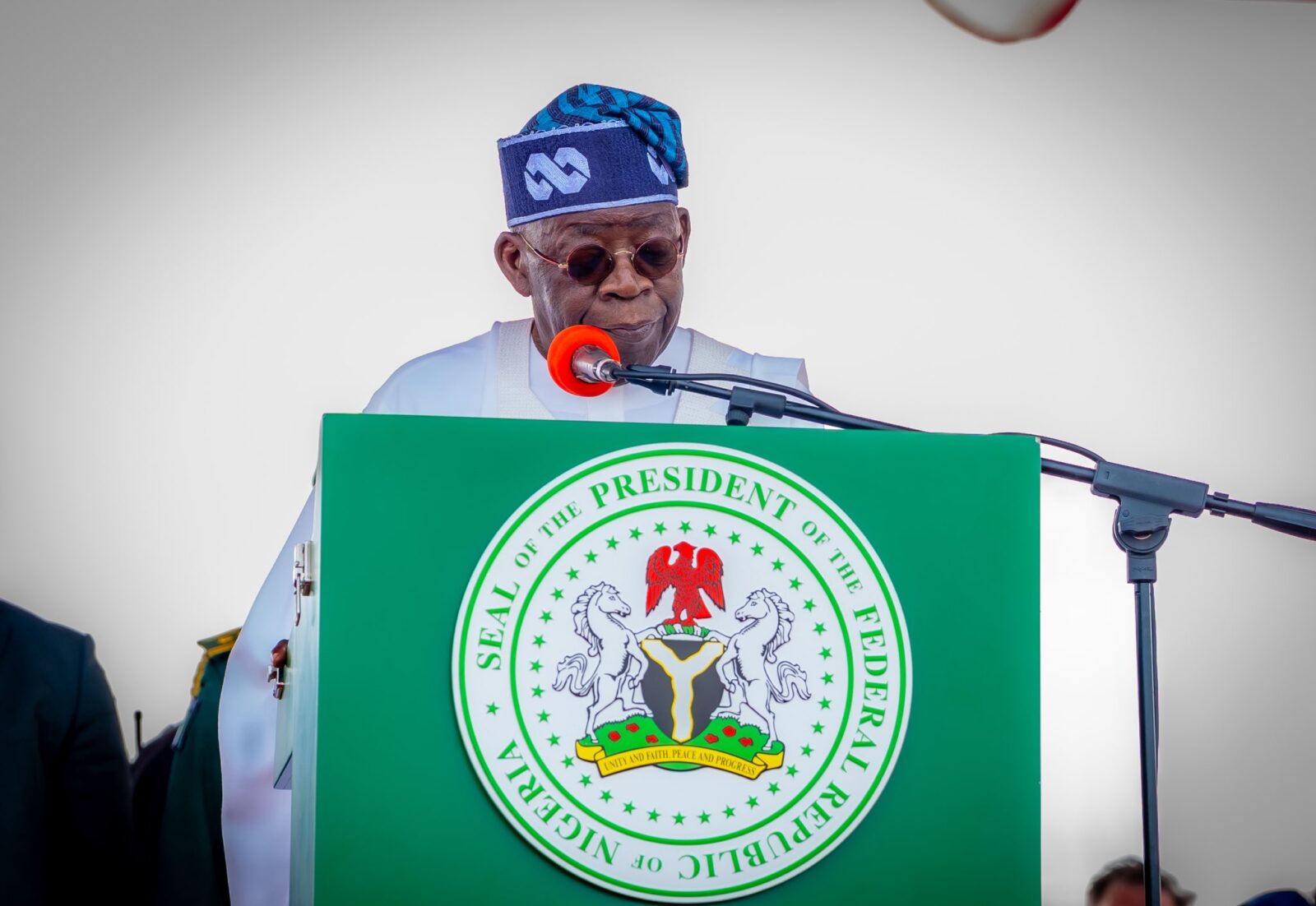
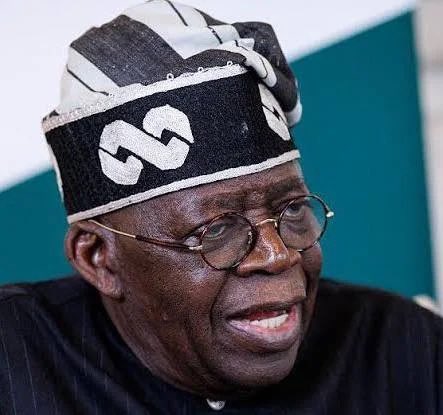
President Bola Ahmed Tinubu today paid tribute to the heroes of the June 12 struggle, unveil fresh national honours for dozens of democracy activists and military officers, defend his administration’s economic reforms, and reaffirm his commitment to defeating terrorism and insecurity across the country.
In a nationwide broadcast commemorating Democracy Day, the President described June 12 as a defining chapter in Nigeria’s history and a powerful reminder of the sacrifices made by citizens who resisted military rule and fought for democratic governance.
He said the day remains more than a commemoration of an election, noting that it symbolizes courage, sacrifice, national unity, and the collective determination of Nigerians to defend freedom and democratic values.
June 12 Heroes Remembered
President Tinubu paid glowing tribute to the late Chief Moshood Kashimawo Olawale (MKO) Abiola, widely regarded as the winner of the annulled June 12, 1993 presidential election, describing him as a symbol of national unity whose mandate transcended ethnic, religious and regional divisions.
He also honoured the memories of Kudirat Abiola, Chief Gani Fawehinmi, Chief Bola Ige, Chief Alfred Rewane, Alhaji Shehu Musa Yar’Adua, Commodore Dan Suleiman, Frank Kokori and numerous other heroes and heroines who paid dearly in the struggle for democratic rule.
According to the President, the freedoms Nigerians enjoy today were built on the sacrifices of men and women who endured persecution, imprisonment, harassment, exile and even death in pursuit of democratic governance.
“We honour the resilience of Nigerians who refused to surrender their faith in freedom and the courage of those who stood firm against intimidation,” he said.
National Honours for Democracy Activists
As part of the Democracy Day celebrations, Tinubu announced a fresh list of national honours for prominent pro-democracy activists, journalists, labour leaders, civil society advocates and military officers who contributed to the restoration and sustenance of democracy in Nigeria.
Among those recognised were veteran activists, journalists and public intellectuals including Ayoka Lawani, Tunde Fagbenle, Richard Akinola, Joe Okei-Odumakin, Femi Aborisade, Jenkins Alumona, Muyiwa Adekeye, Ike Okonta, Babajide Kolade-Otitoju, Sam Omatsaye, Lewis Oju, Oluwatunji Bidu, Ola Dele Alake and several others whose activism helped shape Nigeria’s democratic journey.
The President also recognised military officers who stood against authoritarianism and supported democratic transition, including Major General M.A. Gwadabe, Brigadier General Lawal Jafaru Isa, Colonel Umar Farouk Ahmed, Colonel Sambo Dasuki, Colonel Lawal Gwadabe, Brigadier General Buba Marwa, Major General Chris Alli, Colonel Isa Jibril, Lieutenant Colonel Abubakar Umar and Brigadier General Yahaya Abubakar.
Tinubu disclosed that the complete honours list would be formally published in the coming days.
Security Remains Top Priority
While celebrating democratic progress, the President acknowledged that insecurity remains one of Nigeria’s most pressing challenges.
He expressed concern over the continued captivity of schoolchildren abducted in parts of Oyo and Borno States, describing their plight as a painful reminder of the work still required to secure the country.
Though saddened by the incidents, Tinubu said his administration remains optimistic about the victims’ safe return and reaffirmed its commitment to restoring peace nationwide.
According to him, democracy cannot flourish where citizens live in fear.
“Democracy without security is not solid enough,” he stated.
The President revealed that his administration had declared a security emergency and adopted both kinetic and non-kinetic approaches to combat terrorism, insurgency, banditry and kidnapping.

He announced the recruitment of 50,000 additional police officers and thousands of military personnel to strengthen security operations nationwide.
Tinubu further disclosed that the 2026 national budget allocated ₦5.41 trillion to defence and security, the highest security allocation in Nigeria’s history.
According to him, Nigerian security agencies have recorded significant gains against terrorist groups.
He said terror-related deaths have declined sharply since 2015, while more than 13,000 terrorists were neutralised within the past year alone.
The President also highlighted the success of Operation Safe Corridor, revealing that over 124,000 former insurgents and their dependants have surrendered and embraced rehabilitation since 2023.
While emphasizing rehabilitation efforts, Tinubu warned terrorists, kidnappers and sponsors of violence that the government would show no mercy to those who continue to threaten national security.
“Surrender or face the full force of the Nigerian state. The window of surrender will not remain open forever,” he declared.
Economic Reforms Were Necessary, Says Tinubu
The President devoted a substantial portion of his address to defending the economic reforms introduced since assuming office in 2023.
According to him, Nigeria inherited severe fiscal challenges, declining investor confidence, revenue leakages and mounting economic uncertainty.
He argued that difficult decisions, including subsidy removal and fiscal restructuring, were necessary to prevent economic collapse and restore stability.
Tinubu said the reforms have significantly improved government revenues, enabling states and local governments to receive larger allocations for infrastructure, healthcare, education and security.
He also noted improvements in fiscal transparency and accountability, saying public resources are now being directed more effectively toward national priorities.
The President disclosed that investor confidence has begun to recover, with increased investments recorded in agriculture, manufacturing, energy, mining, transportation, technology and the creative economy.
He further pointed to growing domestic refining capacity as a major achievement, saying it has strengthened Nigeria’s energy security and reduced dependence on imported petroleum products.
Power Sector Reforms Gather Momentum
Addressing Nigeria’s longstanding electricity challenges, Tinubu described the power sector inherited by his administration as fragile, inefficient and burdened by massive debts.
According to him, generation, transmission and distribution systems were characterised by chronic deficiencies, while distribution companies struggled with huge technical losses and a metering deficit exceeding four million consumers.
To address these challenges, he highlighted the implementation of the Electricity Act, which now empowers states to independently generate, transmit and distribute electricity.
The President said the reform marks one of the most significant structural changes in Nigeria’s electricity sector since independence.
He also disclosed that the Presidential Power Sector Task Force has been authorised to raise a ₦4 trillion bond to settle verified legacy debts within the industry.
Additionally, efforts are ongoing to close the metering gap and improve revenue collection throughout the electricity value chain.
Diversity Strengthening Democracy
Reflecting on Nigeria’s democratic evolution over the past 27 years, Tinubu rejected earlier fears that the country’s ethnic and religious diversity could undermine democratic governance.
Instead, he argued that diversity has become one of democracy’s greatest strengths.
“Twenty-seven years ago, many doubted democracy would survive because of our diversity. Today, our diversity sustains our democracy,” he said.
The President described Nigeria’s democratic journey as challenging but resilient, insisting that the nation has repeatedly demonstrated its capacity to overcome adversity.
“Nigeria does not break. We bend, we bleed, but we do not break,” he stated.
Renewing the Democratic Covenant
Tinubu urged Nigerians to recommit themselves to the ideals championed by the June 12 generation, including freedom, justice, accountability, transparency and national unity.
He stressed that the greatest tribute to democracy heroes would be the construction of a nation where opportunities are expanded, institutions remain strong, justice is guaranteed and government remains accountable to the people.
According to him, while the heroes of June 12 secured political freedom, the responsibility of the current generation is to secure economic freedom and ensure democracy delivers tangible benefits to citizens.
“Democracy must be felt in the quality of people’s lives, in opportunities for our youth, in prosperous farmers, successful entrepreneurs and the dignity of our workers,” he said.
The President concluded by urging Nigerians to remain hopeful and united despite current challenges.
“Let us renew our covenant that the labours of our heroes past shall never be in vain and that government of the people, by the people and for the people shall not perish.”
He prayed for peace, prosperity and continued democratic progress across the country.




Leave a comment