


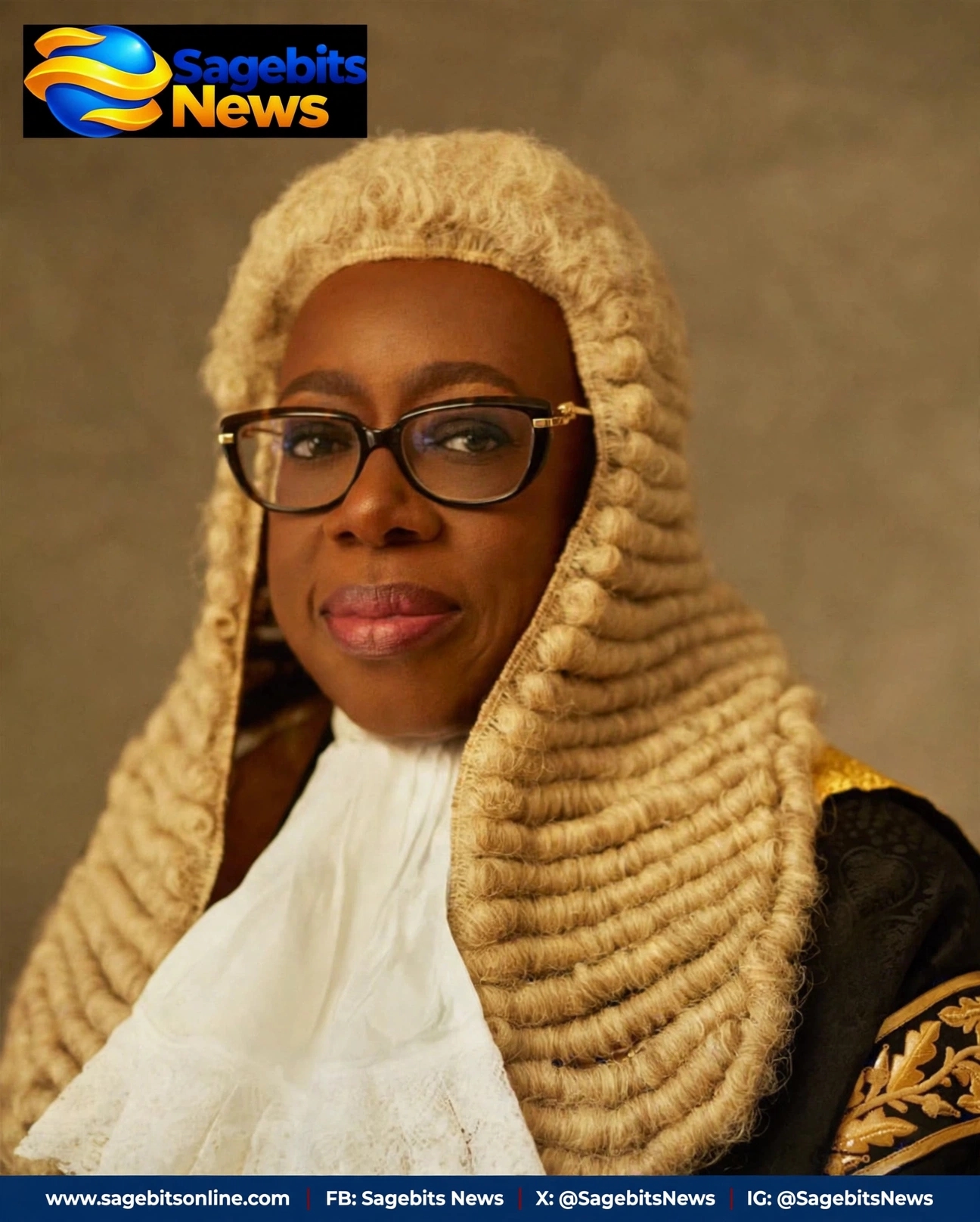
Chief Justice of Nigeria (CJN), Justice Kudirat Kekere-Ekun, has sworn in 12 newly appointed Justices of the Court of Appeal, charging them to protect judicial independence and ensure that their decisions are guided by the law and their conscience.
The swearing-in ceremony took place on Tuesday at the Supreme Court complex in Abuja, where the CJN warned the new appellate judges against allowing political, financial, social and personal pressures to influence their judgments.
Kekere-Ekun stressed that the integrity of the judiciary depended on judges demonstrating impartiality, courage and commitment to the rule of law, irrespective of public expectations or criticism.
She urged them not to be influenced by seniority, reputation, personal relationships or the desire to reach unanimous decisions, noting that judicial officers must be prepared to express dissenting opinions where their understanding of the law differs from that of their colleagues.
“Public approval must not be the basis for you to depart from the law, just as criticism must not deter you from reaching a decision that your conscience and the law require,” she said.
The CJN explained that the new appointments represented an important transition in the judicial careers of the appointees, most of whom previously served as sole presiding judges in lower courts.
She noted that their responsibilities at the Court of Appeal would require them to sit in panels, deliberate collectively and engage with differing legal perspectives while maintaining their individual judicial convictions.
According to her, effective appellate adjudication requires intellectual openness, mutual respect, thorough preparation and a willingness to reconsider initial positions when presented with convincing arguments.
She, however, cautioned that collegiality should not become an excuse for compromising judicial independence, adding that well-reasoned dissenting judgments were legitimate features of appellate proceedings and could contribute to the development of Nigerian jurisprudence.
Kekere-Ekun further reminded the new justices that the Court of Appeal plays a critical role in promoting consistency in the application of the law, correcting judicial errors and clarifying legal principles.
She warned against treating appeals as opportunities to rehear cases simply because an appellate judge might have reached a different conclusion from the lower court.
Instead, she urged them to carefully examine the grounds of appeal, records of proceedings, findings of the lower courts and the legal basis for appellate intervention.
The CJN also called for continuing judicial education, particularly in emerging areas such as digital commerce, data protection, intellectual property, financial regulation, labour relations and artificial intelligence.
She cautioned that although technology could assist legal research and the organisation of judicial work, legal authorities must be independently verified and judicial decisions must remain the product of the judges’ considered reasoning.
The 12 newly sworn-in justices are Yakubu Abdulhammeed Mohammed, Monisola Oluwatoyin Abodunde, Raphael Ajuwa, Elias Ojie Abua, Mbalamen Jennifer Ijohor, Sabiu Bala Shuaibu, James Kolawole Omotosho, Emeka Nwite, Dauda Njane Buba, Sanusi Kado, Enikuomehin Ademola and Julcit Veronica Dadom.
They were drawn from various judicial institutions, including the High Courts of Gombe, Bayelsa, Cross River, Benue, Kebbi, Taraba and Ondo states, the Federal High Court, the National Industrial Court of Nigeria and the Customary Courts of Appeal of Ekiti and Plateau states.
The National Judicial Council (NJC) had recommended their appointments at its meeting held on May 13, 2026, to fill vacancies arising from the elevation and retirement of judicial officers.
Among the newly elevated justices are Justices James Omotosho and Emeka Nwite of the Federal High Court, whose departure from the court will have implications for some high-profile criminal proceedings.
Justice Omotosho presided over the terrorism-related trial of Nnamdi Kanu, while Justice Nwite is handling the alleged ₦80.2 billion fraud case involving former Kogi State Governor Yahaya Bello.
Following their elevation, criminal cases previously before the two judges are to be reassigned to other judges and heard afresh. This means the proceedings in Bello’s case will have to begin de novo before a new judge.
The elevation of the 12 judges comes at a time when public confidence, judicial accountability and the independence of Nigeria’s courts remain important issues in national discourse.
The CJN’s charge underscores the responsibility of the new appellate justices to uphold the credibility of the judiciary through decisions rooted in law, fairness and impartiality.









Leave a comment