


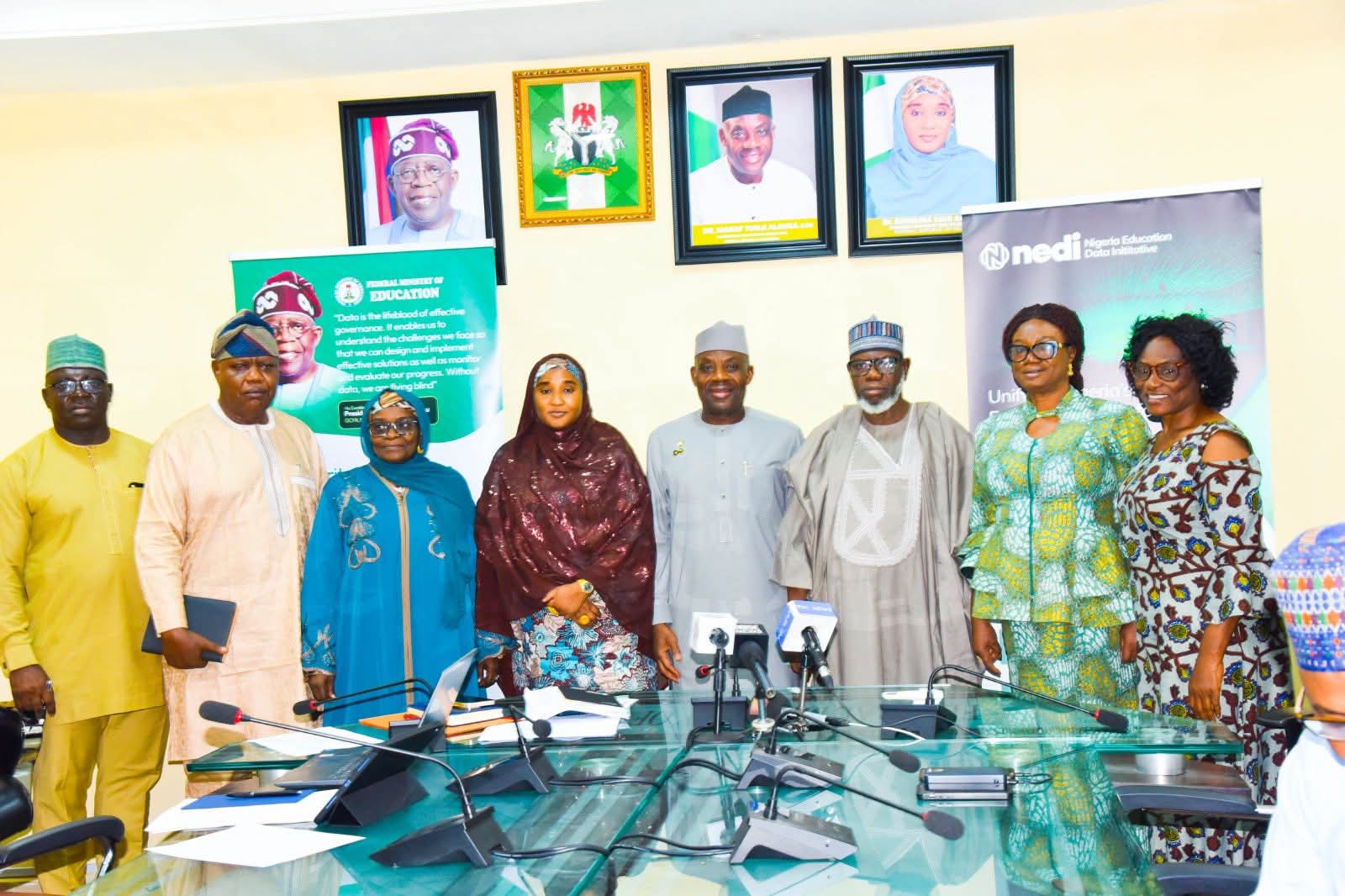
The Federal Government has inaugurated a High-Level Standing Committee on Book Ranking and Selection to overhaul the quality, pricing, and approval of textbooks and instructional materials used in Nigerian schools.

The initiative, led by the Federal Ministry of Education, is aimed at strengthening quality assurance, transparency, and standardisation—particularly at the basic and senior secondary education levels, where concerns over poor-quality books, frequent cosmetic revisions, and rising costs have continued to affect parents and schools.

Speaking at the inauguration, the Minister of Education, Dr. Maruf Tunji Alausa, CON, described the move as a decisive reform to restore credibility and value to Nigeria’s textbook ecosystem.
“Textbooks are central to teaching, learning, and curriculum delivery. This reform is about restoring integrity to the system and ensuring parents are no longer burdened by unnecessary costs,” Alausa said.
The Minister identified key weaknesses in the existing textbook approval framework, including the absence of a clear ranking and benchmarking system, superficial content revisions, the bundling of consumable workbooks with core textbooks, and a lack of pricing transparency.

According to him, these practices undermine affordability, equity, and public confidence in the education system.
“New textbook editions must demonstrate real and measurable content improvement, not cosmetic changes designed to justify higher prices,” he added.
The newly inaugurated committee is expected to develop clear quality benchmarks, introduce a transparent, evidence-based ranking system, separate core textbooks from consumable workbooks, promote pricing transparency, and ensure that only textbooks with substantive content upgrades are approved for use in schools.

The committee is chaired by the Minister of State for Education, Professor Suwaiba Sa’id Ahmad, with members drawn from key education agencies including the Nigerian Educational Research and Development Council (NERDC), Universal Basic Education Commission (UBEC), National Senior Secondary Education Commission (NSSEC), and the National Teachers’ Institute (NTI). NERDC will serve as the secretariat.

Professor Ahmad described the reform as a technology-driven intervention to protect learners and parents while strengthening accountability.
“This framework will eliminate substandard materials, empower teachers, safeguard parents, and ensure value for public investment in education,” she said.
Stakeholders have described the initiative as a critical step toward improving learning outcomes and restoring confidence in textbook development, in line with President Bola Ahmed Tinubu’s Renewed Hope Agenda.










Leave a comment